Cyberattacks Target Supermarket Fridges Across Europe, Greece Warned
Hackers altered refrigeration temperatures in multiple countries, spoiling food and raising fears about critical infrastructure.
KEY POINTS
- Hackers changed refrigeration temperatures in supermarkets across several European countries.
- Attacks in France in October 2026 spoiled large quantities of food, with cold-room temperatures reaching 50 degrees Celsius.
- A new wave on 2 November hit Belgium, Sweden, Ireland, Luxembourg and Estonia.
- Greece reported more than 300 exposed systems and attacks in Kifisia.
- US authorities warned on 5 November about threats to industrial refrigeration systems.
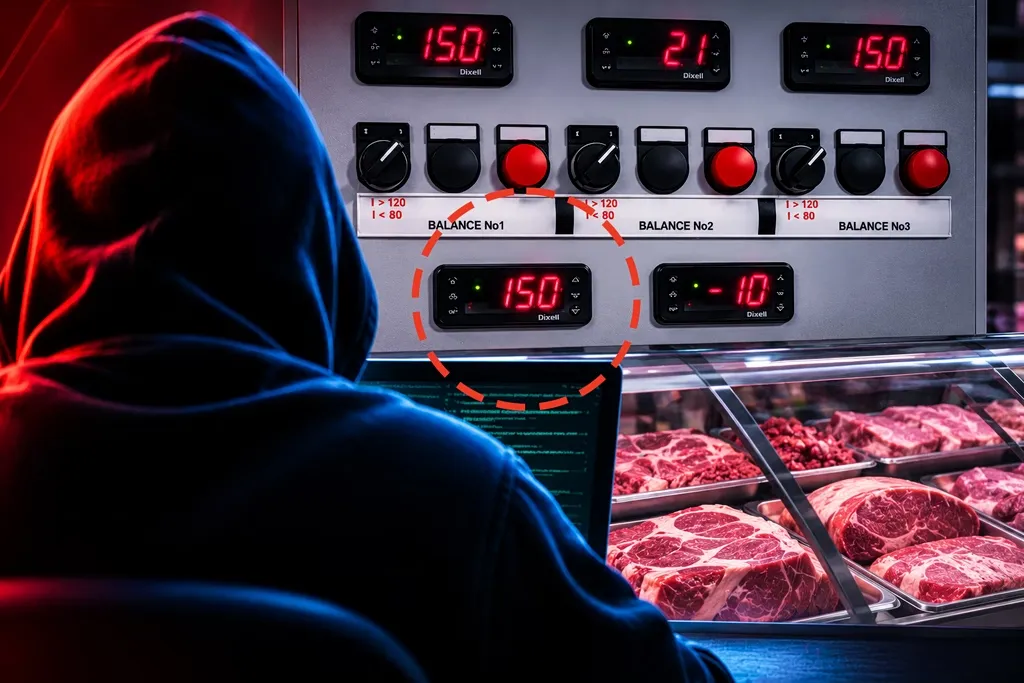
Hackers attacked refrigeration systems at supermarket chains in several European countries, changing temperature settings and causing large quantities of food to spoil. In France, hundreds of stores belonging to major retail chains were hit in October 2026, with temperatures in cold rooms reportedly reaching 50 degrees Celsius.
A new wave of attacks on 2 November struck businesses in Belgium, Sweden, Ireland, Luxembourg and Estonia. Major retail chains confirmed problems with their cooling systems, and some stores had to remove products from refrigerators and freezers to keep food safe.
“The absence of a financial motive or claim of responsibility distinguishes the attack from the usual practices of criminal groups.”
Earlier attacks affected about 40 Delhaize stores in Belgium and Luxembourg, as well as a smaller number of shops in Ireland, Sweden, Estonia, Finland and the Netherlands. No clear financial motive has been identified, and no hacker group has claimed responsibility.
Greece was also affected. Hackers targeted supermarket refrigerators and a butcher shop in Kifisia, and the National Cyber Security Authority identified more than 300 exposed systems in the country.
US authorities issued a warning on 5 November about continuing threats to industrial refrigeration systems, saying exploitation of vulnerabilities in internet-connected temperature controllers could cause serious damage, product losses and disruption to critical facilities.
Security experts warn the supermarket attacks may only be the beginning. They say almost any internet-connected device could become a target, with consequences depending on the system breached. Some experts are examining whether the incidents fit a broader sabotage programme by a state actor, though no link has been confirmed.
US authorities are also investigating refrigeration malfunctions recorded at US military bases in August. It remains unclear whether those incidents are connected to the European attacks.
2 more sources below
COMMENTS (0)
No comments yet. Be the first.
RELATED STORIES
Global markets plunge as Trump blames Democrats for trillion-dollar selloff
World shares fell sharply after US midterm elections, with Asian markets and chip stocks leading the decline.

North Korea denies FBI Binance hack claim and fires cruise missiles
Pyongyang rejects allegations it stole $6 billion from Binance while conducting a new missile test.

Cyberport Venture Forum Concludes with 600 Deal Flows and 2,800 Attendees
Hong Kong's annual Cyberport Venture & Capital Forum 2026 ended after two days of discussions on AI, digital assets and global capital trends.
- BMW cuts 2026 car margin forecast to near zero, warns of possible loss
- Brazil publishes selective consumption tax rates, collection to start in February 2027
- Lula Launches Critical Minerals Council, Calls It Start of New Era
- Bomb threats and cyberattacks disrupt European schools and flights
- LIV Golf Shuts Down Operations After $300 Million Rescue Deal Collapses
This page was compiled with AI assistance from the outlets named above and passed an automated language check before publication. Montegre has no reporters of its own; the byline names the outlets the story was compiled from. Method and editorial standards