Google Tests AI in Space with Suncatcher Satellite and Haiku Signal
Google's experimental Suncatcher satellite ran its Gemma 4 AI model in orbit and returned a haiku to Earth.
KEY POINTS
- Suncatcher satellite launched October 1 on a SpaceX mission
- Gemma 4 AI model processed a ground request in orbit and returned a haiku
- Satellite passed over Svalbard, Norway, during the communication window
- Satellite carries four TPU chips and generates up to one kilowatt of power
- Google aims to explore orbital AI data centers powered by solar energy
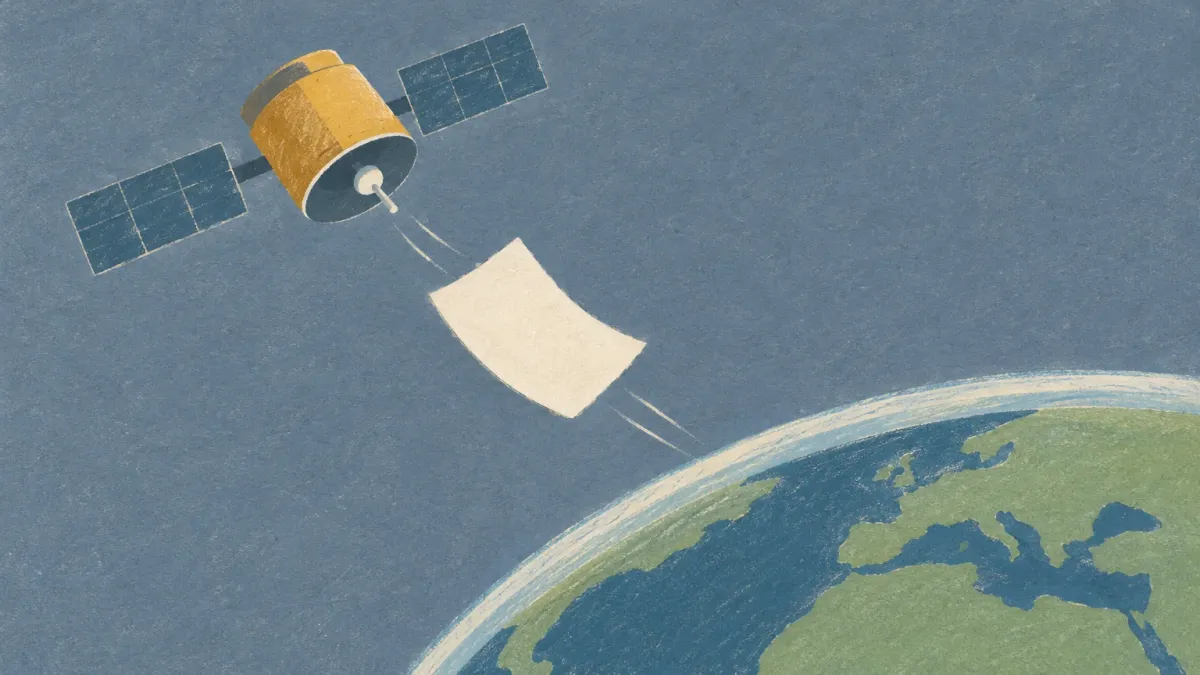
Google's experimental Suncatcher satellite has run an artificial intelligence model in orbit and sent a haiku back to Earth, marking what the company calls the first response from a generative AI chip in space. The prototype, part of Project Suncatcher, launched on October 1 aboard a SpaceX mission and used its onboard Gemma 4 model to process a request from the ground.
The test took place during a communication window with a ground station while the satellite passed over Svalbard, Norway. Engineers asked the model to write a haiku about being in space, and the satellite returned the result after processing the request in orbit.
“Our chips have officially earned their space wings.”
The returned poem read: "Blue marble below", "Data flows with silent elegance", and "Starlight feeds my core". Beyond the poem, the trial proved that the system could receive an instruction, process it in space, and send the answer back to Earth.
Google says the satellite carries four TPU chips and generates up to one kilowatt of power, forcing the team to use only one TPU at a time for about twenty minutes. Omar Sanseviero of Google DeepMind noted on X that the model ran on stored solar energy.
Project Suncatcher aims to place AI data centers in orbit, where solar panels can receive nearly continuous sunlight without using land or water. Google says this addresses physical limits facing terrestrial data centers, including electricity grids, water supplies, and available territory.
The company stressed that the result does not yet equal an operating data center in space. The experiment was a simple demonstration, and Google plans to continue exploring orbital computing as part of its broader research into space-based infrastructure.
2 more sources below
COMMENTS (0)
No comments yet. Be the first.
RELATED STORIES

LPG prices double in Pakistan open market as winter shortage deepens
Official LPG rates rise for November while open-market prices reach twice the regulated level amid Iran-border supply cuts.

Google disables Search for K-12 student accounts unless AI tools are enabled
Google will turn off AI tools and Search for school accounts unless administrators explicitly opt in.

Brazil Unveils Voluntary Roadmap to Cut Fossil Fuel Dependence by 2033
Brazil's COP30 presidency presents a 182-page voluntary roadmap proposing national plans and a three-stage timetable to reduce reliance on oil, gas and coal.
- $5bn Africa Energy Bank Launches in Abuja to Fund Energy Projects
- Russia strikes Ukrainian aid school, killing at least 26
- Van Chamber Election Dispute: White List Boycotts Chair Vote Over Alleged Irregularities
- Education Minister and Businessman Announce New Schools in Malatya
- Tech founder Adam Robinson dies in Florida Learjet crash with eight others
This page was compiled with AI assistance from the outlets named above and passed an automated language check before publication. Montegre has no reporters of its own; the byline names the outlets the story was compiled from. Method and editorial standards