Indian Media Groups Challenge Data Protection Law in Supreme Court
Twenty-one publishers, including Ambani- and Adani-linked outlets, say India’s digital privacy law threatens investigative journalism and source protection.
KEY POINTS
- 21 publishers, including Ambani- and Adani-linked media, challenge India’s Digital Personal Data Protection Act, 2023
- Supreme Court seeks responses from Central government and MeitY; no interim stay granted without hearing government
- Next hearing scheduled for November 17
- Publishers warn the law could force journalists to notify investigation subjects and erase published stories
- Petitioners say the law could expose journalists’ sources and restrict reporting on public officials, crime, business and governance
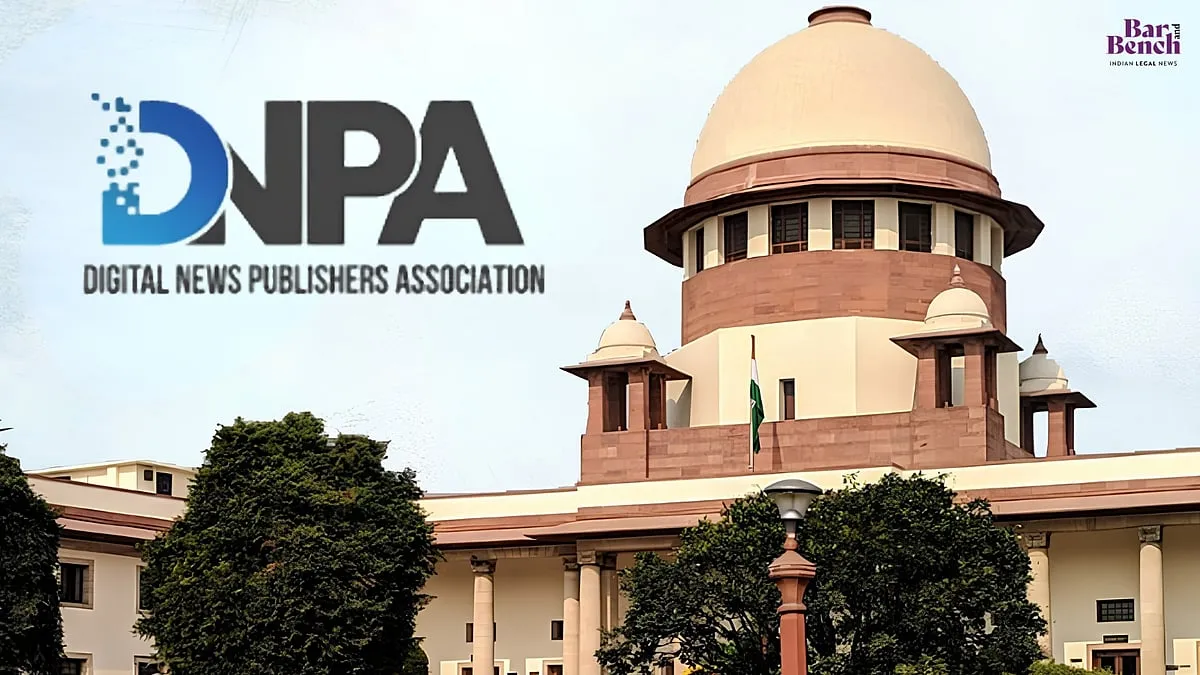
A group of 21 Indian digital news publishers has filed a plea in the Supreme Court challenging provisions of the Digital Personal Data Protection Act, 2023 and the Digital Personal Data Protection Rules, 2025. The publishers argue that without a specific exemption for journalistic activities, reporters could face obligations relating to notice, consent and erasure of personal data while carrying out routine reporting.
The Digital News Publishers Association (DNPA) includes companies owned by Mukesh Ambani’s Reliance group and Gautam Adani’s group, such as Network18 and NDTV. Other members include The Indian Express, Times Internet, The Hindu, India Today, Zee Media, ABP Pvt Ltd., Malayala Manorama, Mathrubhumi Amar Ujala and Eenadu Television Pvt. Ltd.
“Requiring a journalist to notify the subject of an investigation would allow that subject to destroy evidence, intimidate witnesses, or otherwise frustrate the story before publication.”
The publishers say requiring journalists to notify investigation subjects would allow those subjects to destroy evidence, intimidate witnesses or frustrate stories before publication. They also fear people could use consent withdrawal to burden or deter publishers, leading to unpublishing or heavy redaction of factual public-interest reports.
The plea warns that government powers to requisition information could apply to newsrooms and could let New Delhi identify journalists’ sources. Publishers say reporting on public officials, crime, business and governance could be restricted without a press exemption.
A Supreme Court bench led by Chief Justice of India Surya Kant and including Justices Joymalya Bagchi and V Mohana sought responses from the Central government and the Ministry of Electronics and Information Technology. The court declined to grant an interim stay on the law without hearing the government and issued notice on the stay application.
The matter is scheduled for next hearing on November 17. The government announced implementation of the privacy law last year to protect users’ digital personal data, raising compliance requirements for platforms such as Meta and Google.
3 more sources below
COMMENTS (0)
No comments yet. Be the first.
RELATED STORIES
Raj Thackeray Removes Modi-Adani Documentary Following Police Request and Court Order
Raj Thackeray removed a documentary on Prime Minister Narendra Modi and Gautam Adani after a police request, while the Calcutta High Court banned its circulation until January 31, 2027.

Anti-fascist protesters rally as far-right party holds congress in Orléans
Thousands demonstrate against the Rassemblement national congress while Jordan Bardella is re-elected party leader.

Coordinated raids across 30 provinces target Dalton crime network, 85 detained including 30 minors
Police detained 85 suspects in simultaneous operations against the Dalton criminal organization spanning 30 Turkish provinces.
- Meta Raises $97.5 Billion in Stock Sales to Fund AI Expansion
- Gadi Eisenkot challenges Netanyahu in Israel's October 27 election
- Ceuta leader says government could have prevented migrant influx
- Apple releases iOS 27.2 and macOS 27.2 with Siri AI updates
- Ghana to collect 20 percent VAT on foreign digital services at payment point
This page was compiled with AI assistance from the outlets named above and passed an automated language check before publication. Montegre has no reporters of its own; the byline names the outlets the story was compiled from. Method and editorial standards