Chile Freezes Fuel Prices Until February to End Trucker Strike
The government withdraws its fuel bill and promises a price freeze through early February as negotiations with transporters continue.
KEY POINTS
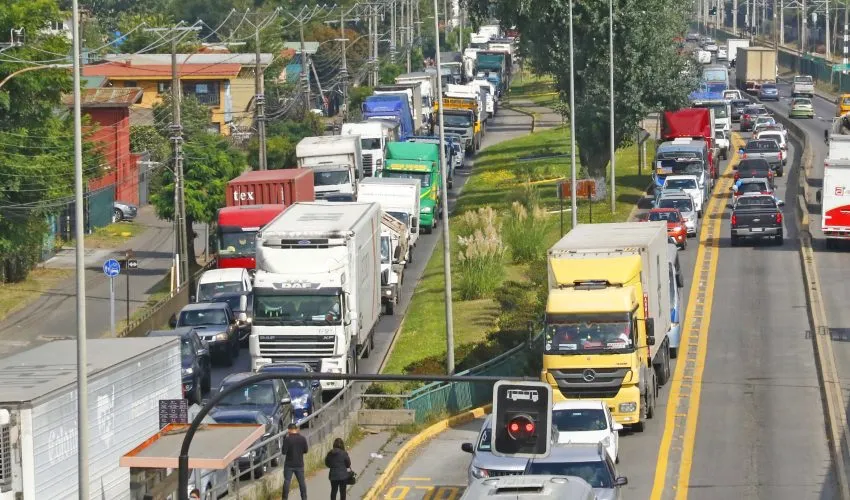
- Trucker unions mobilized in southern Chile, blocking Route 5 South and affecting garbage collection in Santa Bárbara.
- The government proposed the Brake Law to cap fuel increases at 20 pesos per liter for 90 days.
- The bill was withdrawn from Congress to facilitate negotiations with transporter unions.
- A new offer freezes fuel price hikes until early February and reverses this week's Mepco increase.
- Trucker leaders did not lift the strike, pending consultation with their bases.
Trucker unions launched road blockades in southern Chile, disrupting services such as garbage collection in Santa Bárbara due to closures on Route 5 South. The conflict triggered a political controversy in the Biobío Region after the Executive presented its fuel price containment strategy.
The government initially justified the pressure on inflation by stating that diesel rose 80 percent internationally and gasoline 40 percent, noting that Chile imports half of the diesel it consumes. It announced that this week's increase would be limited to 40 pesos per liter instead of the 90 pesos that could have been reached without containment measures.
“The government has decided to freeze the rise in fuel prices until the first days of next February.”
The administration then sent Congress the so-called Brake Law, proposing that for the next 90 days no diesel or gasoline increase exceed 20 pesos per liter. Officials described the measure as a social urgency affecting families, merchants, and transporters.
On Wednesday, the government withdrew the bill from Congress to avoid legislative processing interfering with negotiations led by Interior and Segegob Minister Claudio Alvarado. The initial proposal sought to moderate the pass-through of international price hikes to local prices by around 20 pesos per liter but lacked specific measures for the transport sector.
After a series of meetings, Alvarado announced a broader offer that included reversing the 42-peso diesel and 39-peso gasoline increase scheduled for Thursday through the Mepco stabilization mechanism. The government also decided to freeze fuel price increases until the first days of February, a period of nearly 90 days.
Trucker leaders left La Moneda shortly before 8:30 p.m. without ending the mobilizations, saying they needed to consult their bases and that some demands remained unmet. The Executive committed to resubmitting the bill to Congress on Thursday, with promulgation expected no later than Tuesday.
4 more sources below
COMMENTS (0)
No comments yet. Be the first.
RELATED STORIES

PepsiCo to Cut About 1,000 North America Jobs as Regional Sales Lag
PepsiCo plans to eliminate roughly 1,000 positions in North America over the coming week as the company seeks to simplify operations and be faster and more capable.

Argentina government pushes electoral reform in Senate ahead of November 30 deadline
La Libertad Avanza seeks Senate approval of electoral changes, including PASO suspension, within two weeks.

Spain equates single-parent families with large families in new decree
The government will approve a decree granting single-parent households the same benefits as large families.
- Education Minister Tekin Seeks Handshakes, Opposition Refuses During Budget Talks
- Lima mayor candidate threatens JNE president with prison
- Feijóo launches PP campaign in Badalona, attacks Sánchez and housing strike
- Scott Colom becomes Mississippi's first Black senator elected by voters in 150 years
- US Controlled Over $12 Billion of Venezuelan Revenue in Nine Months, Report Says
This page was compiled with AI assistance from the outlets named above and passed an automated language check before publication. Montegre has no reporters of its own; the byline names the outlets the story was compiled from. Method and editorial standards