Thailand and US sign reciprocal trade deal in Manila
Thailand and the United States have concluded a reciprocal trade agreement, cutting Thai tariffs on US goods to around 19 percent.
KEY POINTS
- Thailand and the US signed a joint statement on the Agreement on Reciprocal Trade in Manila on November 17
- Thailand will eliminate customs duties on US goods and remove non-tariff barriers on automobiles, medical equipment, pharmaceuticals, ethanol, and poultry
- Thailand plans to increase US agricultural imports by approximately 2.6 billion dollars
- The Section 301 forced labor tariff will be lowered from 12.5 percent to 10 percent, with overall reciprocal tariffs capped at 19 percent
- The deal protects Thailand's 2.37-trillion-baht export market and 1.25 million domestic jobs
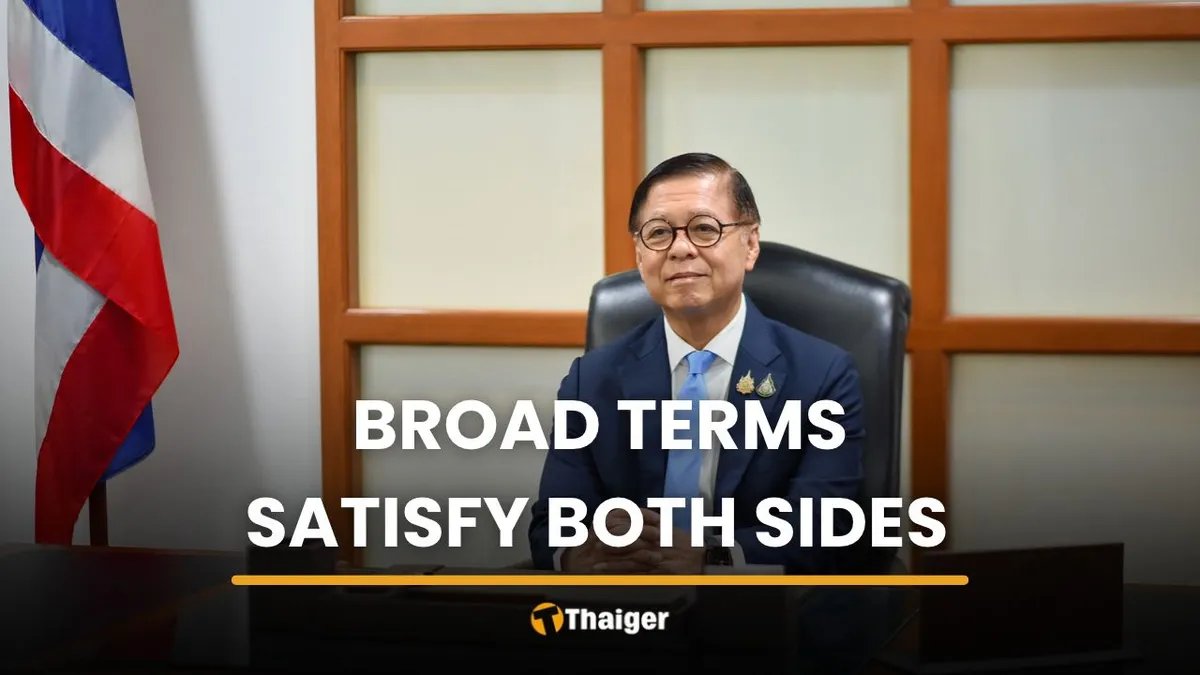
Thailand and the United States agreed on the main principles of a tariff deal, and Prime Minister Anutin Charnvirakul and President Donald Trump signed a joint statement in Manila on November 17 during the special ASEAN-US summit. Foreign Minister Sihasak Phuangketkeow said negotiations had reached a satisfactory conclusion and that both sides were ready to move forward.
The joint statement confirms agreement on the substantive elements of the Agreement on Reciprocal Trade without disclosing exact tariff rates or naming affected products. It is a declaration of progress rather than the final agreement, and both countries must complete domestic procedures before the full deal is formally signed and takes effect.
“This agreement would expand market opportunities for American farmers, emphasizing that it serves the shared interests of both countries.”
Under the framework, Thailand will eliminate customs duties on goods imported from the United States and remove key non-tariff barriers across several product categories, including automobiles, medical equipment, pharmaceuticals, ethanol, and poultry. Thailand also plans to increase imports of US agricultural products by approximately 2.6 billion dollars.
The United States has agreed to grant Thailand the same preferential tax status as regional peers that have already signed the ART. Thailand will immediately lower its Section 301 forced labor tariff from 12.5 percent to 10 percent to match competitors such as Malaysia, Indonesia, and Cambodia, while keeping overall reciprocal tariffs capped at 19 percent.
Deputy Prime Minister and Commerce Minister Suphajee Suthumpun said the agreement in principle will boost investor confidence and protect Thailand's 2.37-trillion-baht export market and 1.25 million domestic jobs. Officials noted that future tariff risks remain due to other US executive trade tools such as Sections 301, 232, and 122.
Anutin previously said on November 5 that Thailand expected a US tariff of around 19 percent under the agreement, and that existing tariff arrangements would continue until the main agreement is signed. The Cabinet had approved the joint statement on November 10.
3 more sources below
COMMENTS (0)
No comments yet. Be the first.
RELATED STORIES
Putin Arrives in China for APEC Summit and Trilateral Meeting with Trump and Xi
Russian President Vladimir Putin has arrived in China for the APEC summit, where he will meet U.S. President Donald Trump and Chinese President Xi Jinping on Thursday.
UEFA backs Philippe Diallo to challenge Infantino for FIFA presidency
UEFA has nominated French federation president Philippe Diallo as its candidate against Gianni Infantino in the March 2027 FIFA Congress election in Rabat.
Planned Power Outages Across Gaziantep Districts Oct 10-16
Grid maintenance will cut electricity in multiple neighborhoods across six districts on a rolling schedule through Oct 16.
- Turkey Grants Residence Permits to Foreign Investors Starting at $150,000
- Brazil's PT backs Moretti fiscal plan after internal dispute ends
- Greek authorities foil Iranian assassination plot, arrest five suspects
- Trump's Navy Secretary Nominee Faces Iran War Questions at Confirmation Hearing
- Peltola leads Alaska Senate race as ranked-choice deadline nears
This page was compiled with AI assistance from the outlets named above and passed an automated language check before publication. Montegre has no reporters of its own; the byline names the outlets the story was compiled from. Method and editorial standards