New York Leads Lawsuits Against Trump Public Charge Rule
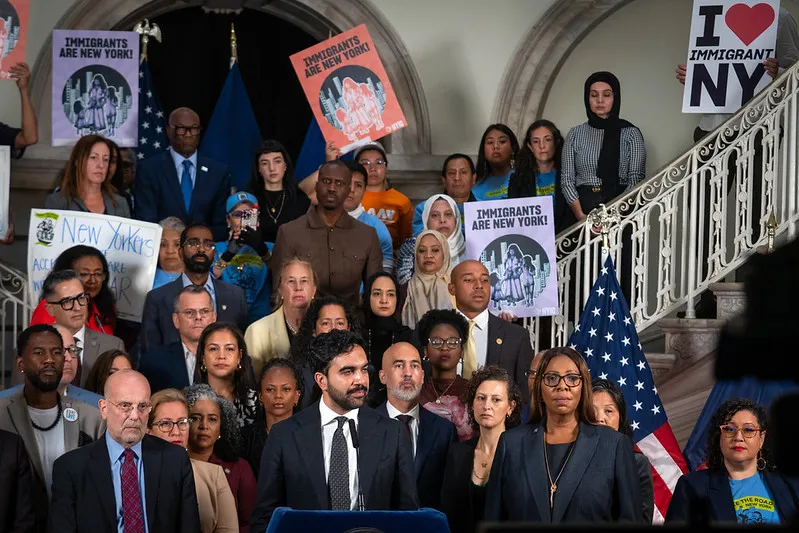
Attorney General James and Mayor Mamdani challenge expanded definition that could deny green cards to immigrants using public benefits.
KEY POINTS
- New rule expands "public charge" definition to include non-cash benefits like Medicaid, SNAP, and housing assistance
- Three separate lawsuits filed by NY Attorney General, NYC Mayor, and Legal Aid Society
- DHS estimates 950,000 immigrants may avoid public benefits due to the rule
- Similar 2019 rule was blocked by courts and later reversed by Biden administration
- Rule takes effect September 18; litigation ongoing in federal court
New York Attorney General Letitia James and Mayor Zohran Mamdani filed separate lawsuits this week challenging a federal rule set to take effect September 18. The Department of Homeland Security policy dramatically expands which public benefits count against green card applicants under the "public charge" test.
James leads a coalition of 21 states and the District of Columbia in a suit filed in the Southern District of New York. Mamdani filed a separate suit joined by Chicago, San Francisco, Santa Clara County, Seattle, King County, and the Public Rights Project. The Legal Aid Society filed a third suit Thursday, creating a trifecta of legal challenges.
“At a time when we are facing the reality of being the most expensive city in the United States of America, to see the federal government pursue rule changes and legislation that will make hungry New Yorkers hungrier, that will make poor New Yorkers poorer — it is a slap in the face.”
The new rule allows immigration officers to consider nearly any public benefit used for any length of time, including benefits lawfully received by U.S. citizen children. This reverses a 2022 policy that limited public charge determinations to cash assistance or long-term institutionalization.
DHS estimates roughly 950,000 people may disenroll or avoid enrolling in public assistance programs as a result. James's office said the 2019 version caused dropout rates up to 35% among mixed-status families and 60% among refugees.
The Trump administration argues the change restores the principle of immigrant self-reliance and protects taxpayer resources. A similar 2019 rule was blocked in court and later rescinded by the Biden administration. Litigation is ongoing and it remains unclear how court actions will affect the rule's implementation.
4 more sources below
TOPICS
COMMENTS (0)
No comments yet. Be the first.
RELATED STORIES
Colombian Senate passes government surrender bill, Chamber debate continues
The Senate approved President Abelardo de la Espriella's public order bill with 57 votes in favor and 24 against, sending it to the Chamber of Representatives.

Florida voters approve Amendment 3 to raise homestead exemption to $250,000 by 2028
Amendment 3 will increase Florida’s homestead exemption and lower assessment caps for non-homestead properties starting in 2027.

Democrats poised to seize Congress and state governments in midterm elections
A Democratic sweep of Congress and state governments could reshape U.S. climate policy and constrain President Trump's agenda.
- US Democrats credit Brazil's Lula victory after defeating Trump-backed candidate
- Vance blames Iran war for Republican midterm defeat
- Danish students protest cuts to state education grants
- Tsipras Visits Kalamata Hospital, Accuses Mitsotakis Government of Undermining Public Health System
- Democrats win US Congress, Trump faces tougher oversight and transatlantic uncertainty
This page was compiled with AI assistance from the outlets named above and passed an automated language check before publication. Montegre has no reporters of its own; the byline names the outlets the story was compiled from. Method and editorial standards