AI-assisted discovery exposes critical Java vulnerability affecting Fortune 500 firms
Security startup Calif says AI helped find a Java flaw that could let attackers gain unauthorized remote access.
KEY POINTS
- Calif used AI to discover a critical Java vulnerability named Java4Shell
- The flaw resides in Java's Base64 decoder and may allow unauthorized remote access
- Java is used by about 90 percent of Fortune 500 companies and by banks, hospitals, airlines, and government agencies
- GPT-6 Cyber from OpenAI assisted in the discovery
- Oracle released a security update on Tuesday; the NSA did not comment
A cybersecurity startup named Calif announced on Tuesday that it used a new artificial intelligence model to uncover a critical software flaw in Java. The vulnerability, dubbed Java4Shell, was found in Java's Base64 decoder, a component that converts certain binary data into text.
The flaw could allow attackers to obtain unauthorized remote access to internal systems. Quang Luong, a researcher at Calif, identified the problem when Java mishandled a specific sequence consisting of 64 letters "A" followed by an equals sign. Under certain conditions, this unexpected behavior can cause the program to perform improper operations in computer memory.
“Java is the beating heart of the modern economy. In practice, almost all large companies will be affected by this flaw.”
Java is used by banks, hospitals, airlines, technology companies, and government agencies, including bodies linked to national security. It is present in systems of approximately 90 percent of Fortune 500 companies. Bruce Dang, a senior researcher at Calif, said Java is the beating heart of the modern economy and that nearly every large company will be affected.
The discovery was made with the help of GPT-6 Cyber, a model recently launched by OpenAI for digital security research. Calif worked in recent days in coordination with intelligence-sharing agencies from the Five Eyes alliance, which comprises the United States, Canada, Australia, New Zealand, and the United Kingdom, as well as private-sector vendors such as Google and Microsoft.
The U.S. National Security Agency did not respond to requests for comment. Its classified network went offline on Tuesday for what it described as routine software maintenance, and it is unclear whether the outage was related to fixing the Java vulnerability. Oracle, owner of the Java brand and commercial license provider, also did not comment but released a security update on Tuesday.
AI-assisted vulnerability announcements by Calif and other groups are changing perceptions in the cybersecurity sector. These tools are accelerating the identification of software flaws at a pace that may challenge the response capacity of digital security professionals.
3 more sources below
COMMENTS (0)
No comments yet. Be the first.
RELATED STORIES

IEA says Iran war energy shock will permanently reshape global power systems
The International Energy Agency warns the world cannot return to pre-crisis energy patterns after the Iran war disrupted global markets.

India revises PUC certificate validity rules for vehicle categories
New rules tie pollution certificate validity to emission standard, vehicle age and transport use.
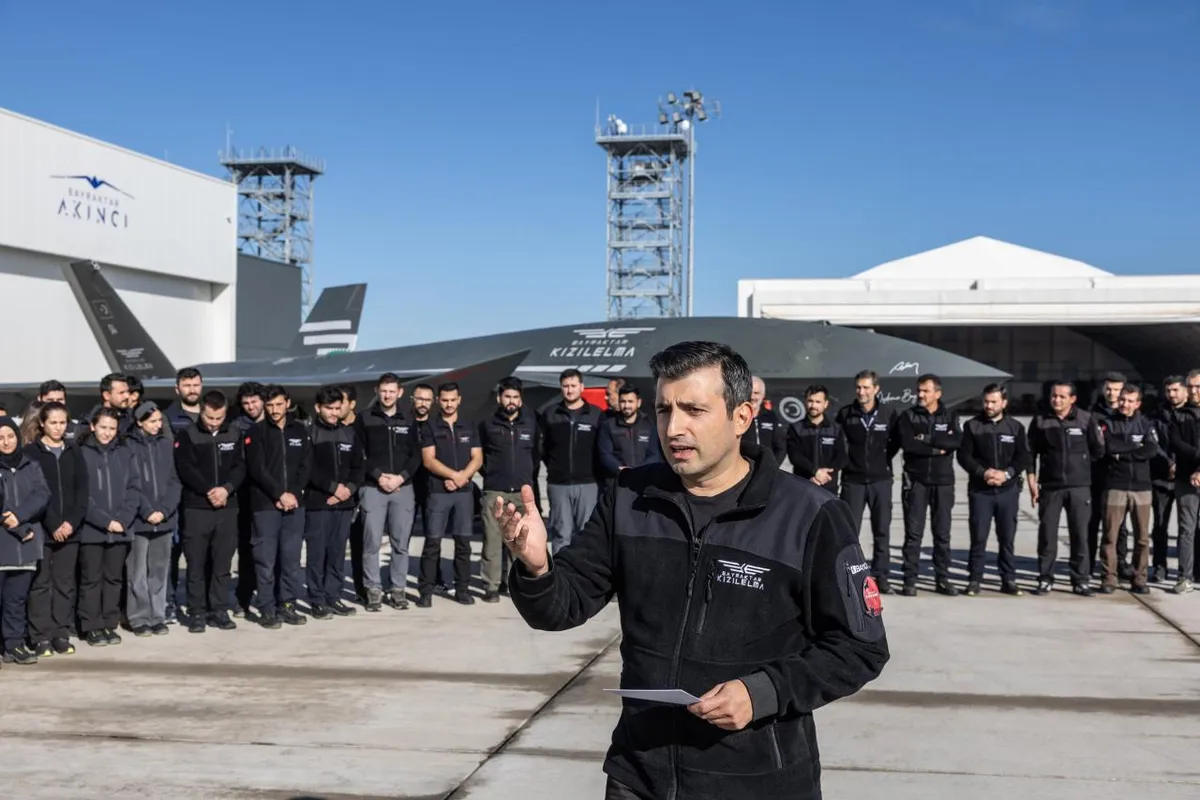
Turkey receives first Kizilelma combat drone, a world first
Turkey becomes the first country to induct an unmanned combat aircraft into its armed forces.
- Anthropic Founders Set to Become Billionaires in Record Nasdaq IPO
- Milan court postpones final hearing in child social media lawsuit against Meta and TikTok until January 21
- European Commission Hit by Cyberattack, Staff Data at Risk
- Detained police officer claims setup in Gülistan Doku investigation
- Musk regrets $442 million Republican spending after midterm losses
This page was compiled with AI assistance from the outlets named above and passed an automated language check before publication. Montegre has no reporters of its own; the byline names the outlets the story was compiled from. Method and editorial standards