Flydubai co-pilot attacks captain; passengers subdue hijacker, plane lands safely
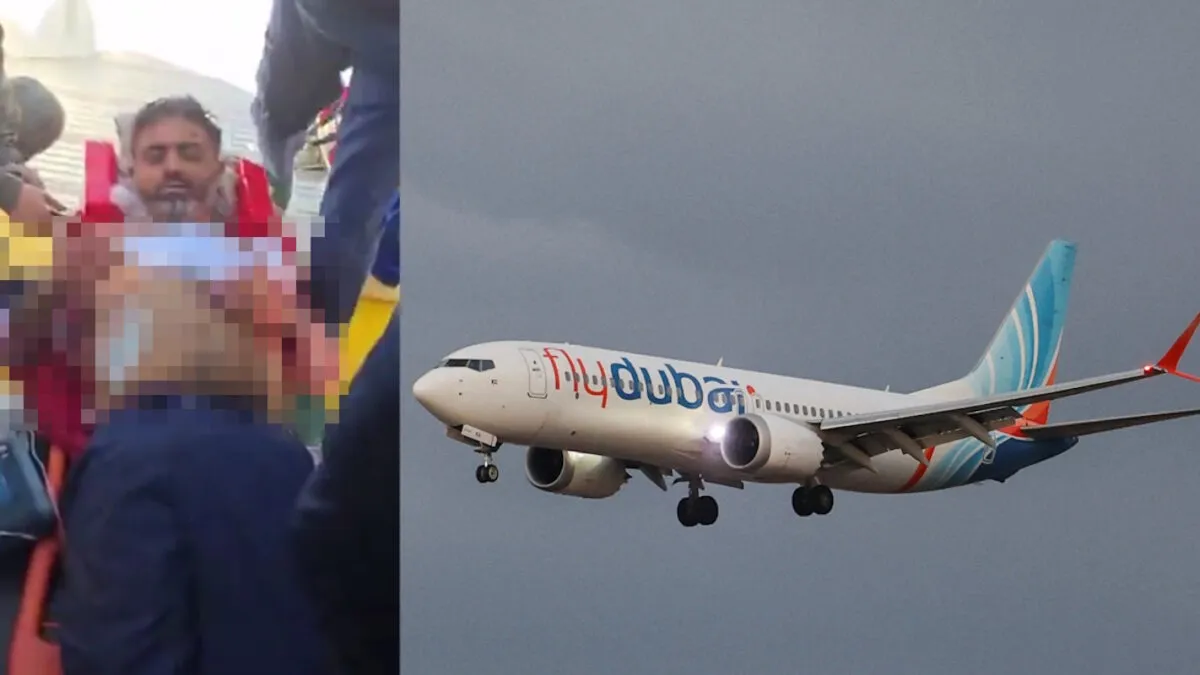
A Flydubai flight from Dubai to Tel Aviv diverted to Saudi Arabia after the first officer stabbed the captain; passengers and off-duty pilots restrained the attacker and helped land the aircraft.
KEY POINTS
- Flydubai flight FZ1073 from Dubai to Tel Aviv diverted to Tabuk, Saudi Arabia on Sept 30, 2026
- First officer stabbed captain Smit Machchhar, causing severe head and hand injuries
- Aircraft lost ~14,000 feet in 30 seconds and squawked hijack code 7500
- Captain unlocked cockpit door; passengers and off-duty pilots restrained attacker with headphone cables
- Netanyahu called it attempted hijacking by "radical Islamist"; U.S. and Israel blame Iran, UAE objects to premature conclusions
Flydubai flight FZ1073, a Boeing 737 MAX 8 carrying 174 mostly Israeli passengers, departed Dubai on September 30, 2026, bound for Tel Aviv. While cruising near Jordanian and Saudi airspace, the Omani first officer allegedly attacked the captain, Indian national Smit Machchhar, with a knife, inflicting severe wounds to his head and nearly severing his hand.
The struggle caused the aircraft to enter a steep descent, losing roughly 14,000 feet in about 30 seconds and triggering the hijack transponder code 7500. Despite his injuries, the captain managed to unlock the reinforced cockpit door, allowing crew members and passengers — including two off-duty Flydubai pilots — to enter and subdue the attacker using headphone cables.
“If he hadn't managed it, all lives on the aircraft would have been lost.”
Passengers pulled the control column back to stabilize the plane while a doctor on board, Dr. Shota Musayev, provided first aid to the bleeding captain. The aircraft diverted to Tabuk, Saudi Arabia, where it landed safely. Israeli Prime Minister Benjamin Netanyahu praised the passengers as heroes and labeled the incident an attempted hijacking by a "radical Islamist" on a suicide mission.
U.S. and Israeli officials quickly pointed to Iranian involvement, a claim the United Arab Emirates criticized as premature. Aviation security expert Philip Baum highlighted a critical paradox: the reinforced cockpit door, designed to keep threats out, nearly prevented the rescue when the threat was already inside. Investigations are ongoing to determine the attacker's motive.
13 more sources below
TOPICS
COMMENTS (0)
No comments yet. Be the first.
RELATED STORIES

US banking and NSA networks fail amid widening infrastructure crisis
Bank customers faced login failures while the NSA's classified internal network went offline, with no confirmed cyberattack found.

UK expands subsidised jobs scheme for young unemployed ahead of Milburn report
The government will widen a guaranteed jobs programme for 18- to 24-year-olds as official data shows youth unemployment above 15 per cent.
Parliament Speaker Kurtulmus Visits IYI Party Leader Dervisoglu Over Monitoring Commission
Numan Kurtulmus met with Müsavat Dervisoglu to discuss the planned parliamentary monitoring commission; the IYI Party said it will not join the commission but will observe its work.
- Britain sanctions eight Israeli firms and Tzav 9 over settlements and Gaza aid
- Strong El Nino Fuels Fires, Floods and Cocoa Losses Worldwide
- Xiaomi 18 Pro and Pro Max Launch Globally with Rear Displays and 200MP Cameras
- Pope Leo XIV urges dialogue and less division after US midterms
- Multiple Earthquakes Recorded in Lake Van Region, Largest at 4.4 Magnitude
This page was compiled with AI assistance from the outlets named above and passed an automated language check before publication. Montegre has no reporters of its own; the byline names the outlets the story was compiled from. Method and editorial standards