Indonesia peat fires drive severe haze across Southeast Asia
Underground peatland fires worsened by El Niño and drainage for plantations have blanketed the region in hazardous smoke since April.
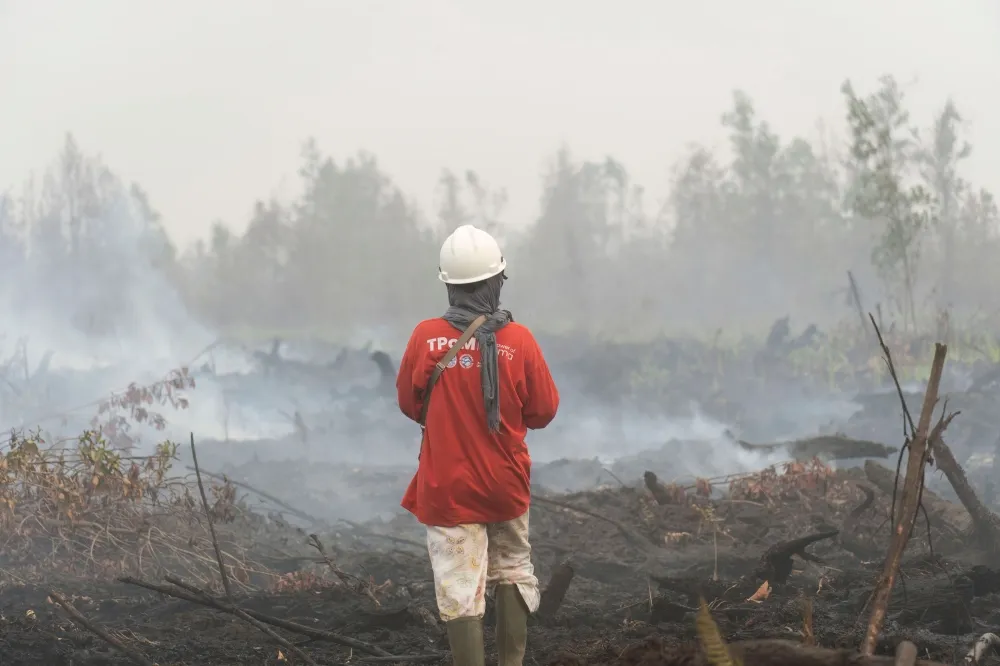
KEY POINTS
- Peatland fires in Borneo and Sumatra cause transboundary haze across Southeast Asia
- 16.4 million hectares of Indonesia's 24.2 million hectares of peatland are degraded
- Drainage canals for plantations span ~285,000 km, drying peat and increasing fire risk
- Super El Niño conditions have intensified the 2026 dry season fires
- Fire emissions ranked highest globally for a month, ~50% of world total in early October
Months of sustained wildfires across Indonesian Borneo and Sumatra have produced hazardous haze affecting air quality in Malaysia, Singapore and the Philippines. The fires burn slowly underground in carbon-rich peatlands, making them difficult to extinguish and allowing them to smoulder for months.
Indonesia holds about a third of the world's tropical peatlands, but 16.4 million hectares of its estimated 24.2 million hectares have been degraded. Drainage canals stretching roughly 285,000 kilometres — dug for timber, pulp, rice and palm oil plantations — dry out the peat and create fire-prone conditions.
“Emissions from Indonesia's fires have been the highest in the world for a month, making up almost half the global total over the last seven days.”
A severe "super El Niño" has brought additional heat and drought, accelerating the spread of fires this dry season. Emissions from the fires have ranked highest globally for a month, contributing nearly half of the world's total fire emissions over a recent seven-day period, according to the EU's Copernicus monitoring service.
Air pollution indices in parts of Borneo and Sumatra have exceeded 1,000, while Singapore recorded a one-hour PM2.5 peak of 284 micrograms per cubic metre. The crisis has triggered a spike in respiratory illnesses and diplomatic friction, with neighbours questioning Jakarta's fire management and its reluctance to accept outside assistance.
Official Indonesian data last updated in July reported 202,000 hectares burned, but environment group Auriga estimates over 637,000 hectares were damaged from January to August. Deforestation monitor Nusantara Atlas puts the figure even higher at nearly 900,000 hectares.
3 more sources below
COMMENTS (0)
No comments yet. Be the first.
RELATED STORIES

No Kings protests across Connecticut focus on voting and early turnout
Hundreds gathered at dozens of demonstrations across Connecticut on Saturday, urging early voting and defending democracy ahead of the midterm elections.

PL wins record votes as Nikolas Ferreira and Lucas Pavanato top federal deputy rankings
Brazil's Liberal Party secured 121 seats in the Chamber of Deputies, while Nikolas Ferreira and Lucas Pavanato set new vote records in the 2026 elections.

Celine Dion Concludes Paris Concert Residency After Six-Year Absence
The Quebec singer performed her final Paris show on October 16, 2026, with President Macron among the audience.
- Heavy Rain Floods Istanbul, Electrocution Kills Teenager
- Democrats use Iran war votes in campaign ads across 50 races
- Stampede at Kolkata Durga Puja Pandal Kills at Least 17
- Trump Hosts Maher, Smith and Kid Rock for Four-Hour White House Dinner
- Hurricane Trudy Approaches Mexico's Pacific Coast as Cold Air Mass Brings Frost
This page was compiled with AI assistance from the outlets named above and passed an automated language check before publication. Montegre has no reporters of its own; the byline names the outlets the story was compiled from. Method and editorial standards