Lewis Pugh swims Strait of Hormuz amid Iran war to protect wildlife
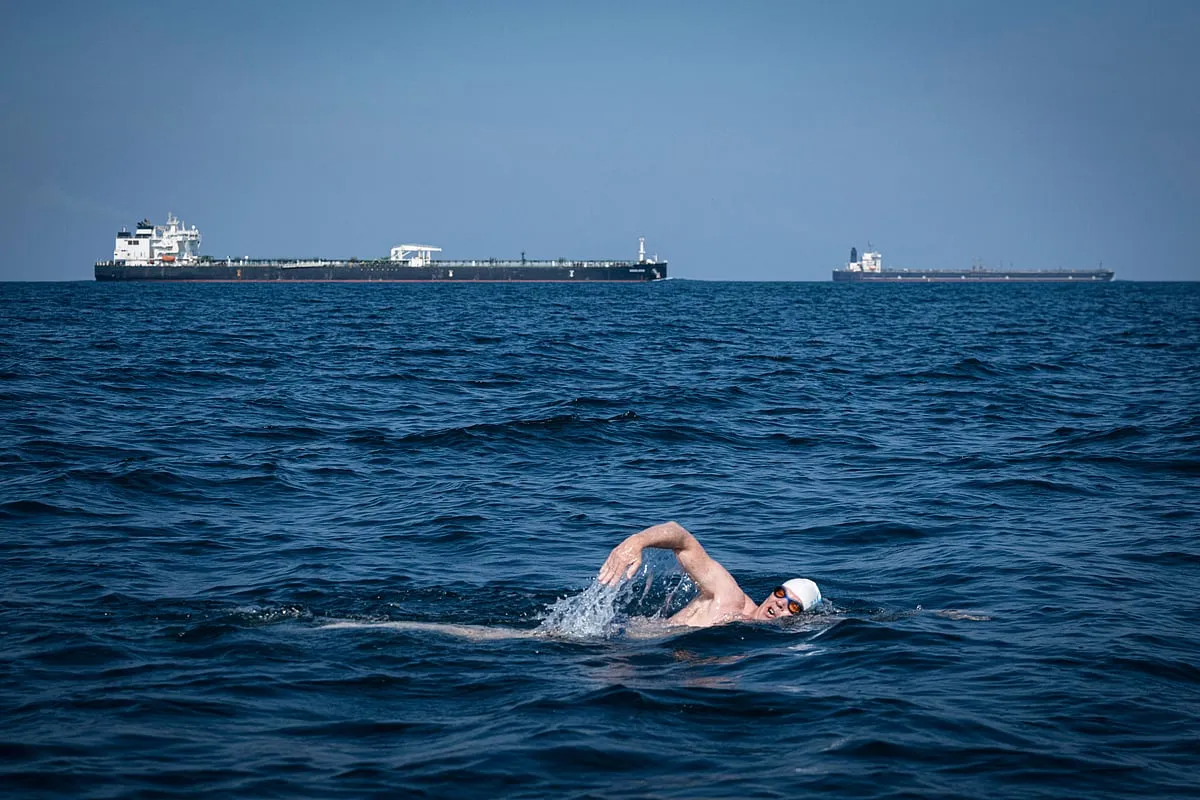
British endurance swimmer Lewis Pugh completed a 15-kilometer swim through the Strait of Hormuz as tankers were attacked nearby, warning that oil pollution endangers dolphins and mangroves.
KEY POINTS
- Lewis Pugh swam about 15 kilometers through the Strait of Hormuz over three days
- Pugh heard explosions and saw an oil tanker hit four kilometers away shortly after entering the water on Monday
- Pugh is a United Nations Patron of the Oceans and is believed to be the first long-distance swimmer in the strait since the war began
- Oil pollution from damaged tankers threatens dolphins and mangroves
- Pugh warned the area could take years or decades to recover
British endurance swimmer Lewis Pugh spent three days this week swimming parts of the Strait of Hormuz to draw attention to how the war with Iran threatens the area's habitat and wildlife. Pugh, 56, is a United Nations Patron of the Oceans and has previously swum in the North Pole and Antarctica for environmental causes.
Wearing only swimming trunks, goggles and a cap bearing the U.N. logo, Pugh started from the Musandam peninsula on the southern tip of the strait and ended by rounding the Cape of Hormuz. He completed about 15 kilometers, or 9.3 miles, in total.
“With all these ships being sunk, this area is under severe threat. It's going to take years, decades for this area to recover.”
Minutes after entering the water on Monday, Pugh heard two loud explosions that rocked the sea. He saw an oil tanker about four kilometers away being hit, followed by fighter jets arriving, and decided to leave the area immediately.
Pugh finished his feat after several stops and starts, including passing another vessel that sent fireballs into the sky after it was attacked. He is believed to be the first person to undertake a long-distance swim there since the war started.
Pugh described the strait as one of the most beautiful places he has ever been and a treasure trove of the natural world. He warned that with ships being sunk, the area faces severe threat and may take years or decades to recover.
Oil pollution from damaged tankers threatens dolphins and mangroves in the region. Iran has increased attacks on vessels it claimed traveled along unauthorized routes as it seeks to impose control over the crucial waterway, where a fifth of all traded oil passed before the U.S. and Israel launched the war on February 28.
2 more sources below
COMMENTS (0)
No comments yet. Be the first.
RELATED STORIES

Mamdani Defends Oct. 7 Statement Amid Antisemitism Concerns
New York City Mayor Zohran Mamdani faced sharp questioning over his Oct. 7 social media post and rising antisemitism at the Times DealBook Summit.
Brazil condemns Russian attack near its embassy in Kyiv without naming Russia
Brazilian diplomats took shelter as drone debris struck the embassy compound during a Russian strike on Kyiv.

Suspected cartel leader El Chapo Isidro arrested in Sinaloa, Mexico, sparking gun battles
Federal forces detained Fausto Isidro Meza Flores in Guasave on Friday night, triggering armed clashes, vehicle burnings and road blockades across Sinaloa.
- US shoppers stockpile supplies amid fears of global tech blackout
- Greek Police Recover 268 Stolen Luxury Vehicles Worth Over 5 Million Euros in International Crackdown
- Texas Governor-elect Hinojosa Promises Secure Border While Opposing ICE Tactics
- Police in Sakarya foil 15 armed attack plans, one suspect remanded
- UN Talks on Autonomous Weapons End Without Consensus as Russia Blocks Negotiations
This page was compiled with AI assistance from the outlets named above and passed an automated language check before publication. Montegre has no reporters of its own; the byline names the outlets the story was compiled from. Method and editorial standards