Greek women of Pindus carried supplies to front-line soldiers in 1940 war
Women from mountain villages transported food, ammunition and clothing to Greek troops resisting the Italian invasion in October 1940.
KEY POINTS
- Italy invaded Greece on 28 October 1940 after Greece rejected an ultimatum
- Thessalian units of the I Division blocked and pushed back Italian forces beyond the border
- Women from Pindus villages carried food, ammunition and clothing to front-line troops
- Historian Theodoros Nimas called the Epic of Pindus essentially the Epic of the Thessalians
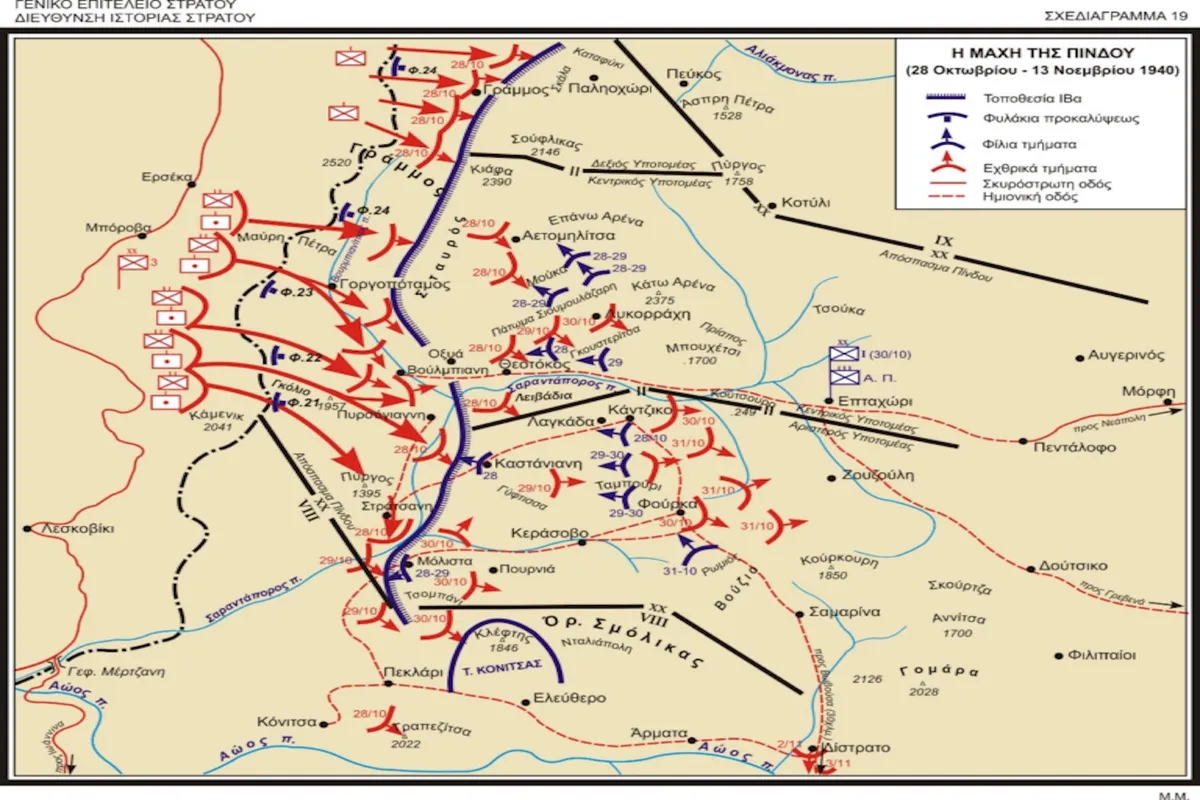
On 28 October 1940, fascist Italy attacked Greece after the Greek prime minister rejected an ultimatum demanding the right to occupy strategic points by force. The date marks the historic “Ohi” refusal and the start of the Greco-Italian war of 1940–41.
Greek forces, supported by the local population, resisted the numerically and materially superior invader and forced them into a humiliating defeat. Two decisive multi-day battles stand out: the Battle of Pindus and the repulsion of the Italians’ major spring offensive.
“What we call the Epic of Pindus is essentially the Epic of the Thessalians.”
Thessalian soldiers played a leading role through units of the I Division from Larissa, including infantry regiments from Larissa, Trikala and Volos, the 51st and 52nd Regiments, and the Larissa Cavalry Brigade. Historian Theodoros Nimas described their actions in a book on Thessalians’ participation in national struggles.
According to Nimas, the I Division of Thessaly initially blocked and then, through hard fighting, pushed the Italian invaders beyond the Greco-Albanian borders. He said this overturned Benito Mussolini’s plans for a rapid advance and occupation of Greece, calling the Epic of Pindus essentially the Epic of the Thessalians.
Women from Pindus villages carried supplies on their backs through snow, rain and freezing cold to soldiers at the front. They transported food, clothing, ammunition and other essential materials along mountain paths that even vehicles could not reach under normal conditions.
Their effort made a decisive contribution to the Greek resistance against the Italian invasion. Without uniforms or weapons, they became symbols of courage and self-sacrifice behind the front lines.
11 more sources below
COMMENTS (0)
No comments yet. Be the first.
RELATED STORIES

Mayors Mark 103rd Republic Day Anniversary in Separate Messages
Mayors of Talas and Kocaeli issue Republic Day messages honoring Mustafa Kemal Atatürk and the War of Independence.
Serbian opposition election win raises questions over Russian gas ties
Serbia's student-backed opposition victory puts Russian gas transit and Moscow's regional influence at risk.

Flávio Bolsonaro Enters Argentina and Flies to Ecuador Despite Travel Ban
Argentina's migration authority confirms the defeated presidential candidate crossed into Argentina with his family and boarded a private flight to Guayaquil.
- Turkey ready to sign maritime boundary deal with Egypt, defense ministry says
- Greek military parade to showcase Centaur and Achilles Shield systems
- Brazil Supreme Court Opens Inquiry Into Foreign Funds in Flávio Bolsonaro Campaign
- EU Commission proposes stronger Frontex with 30,000 agents and social media monitoring
- Teacher detained in Edremit over flag and Atatürk insult claims
This page was compiled with AI assistance from the outlets named above and passed an automated language check before publication. Montegre has no reporters of its own; the byline names the outlets the story was compiled from. Method and editorial standards