Romanian Justice Minister rejects immediate payment of judges' salary arrears
Justice Minister Radu Marinescu says court-ordered salary arrears must be paid but not all at once, citing budget constraints.
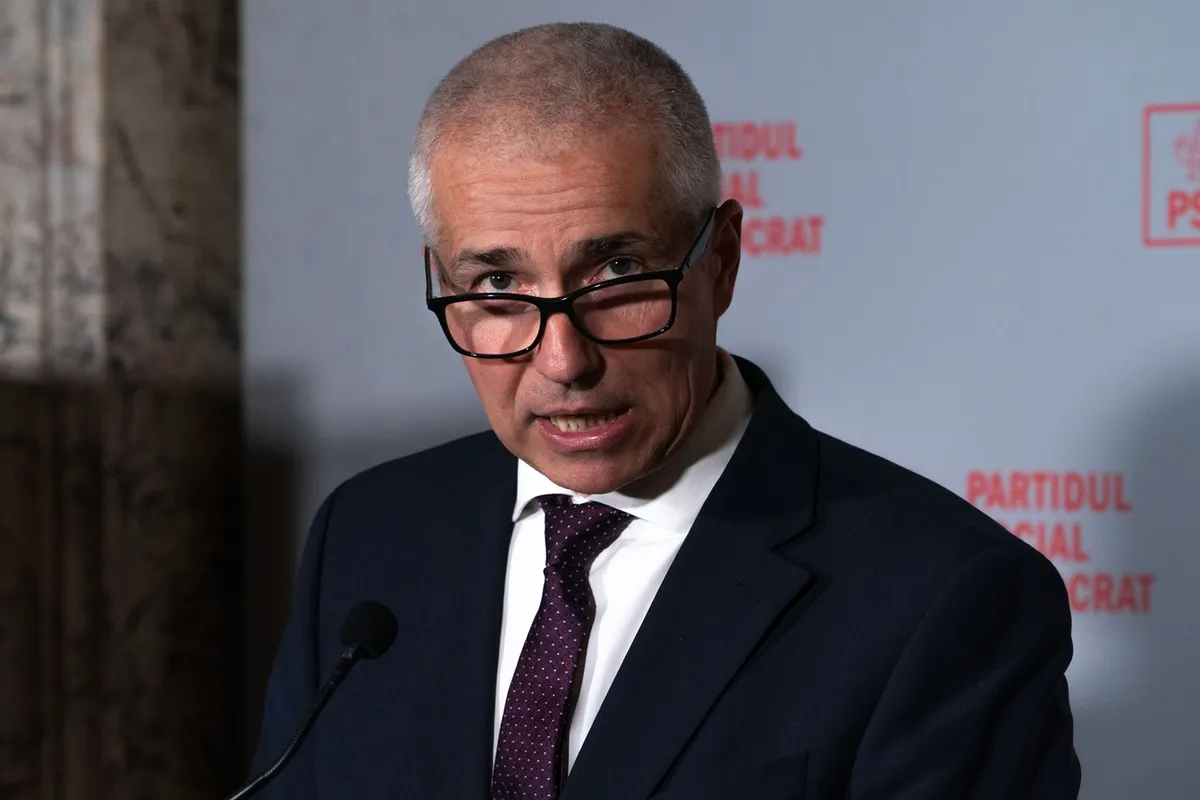
KEY POINTS
- Justice Minister Radu Marinescu says court-ordered salary arrears must be paid but not immediately in full
- The state owes nearly 5 billion lei in judges' salary arrears, due in 2026
- Finance Minister Alexandru Nazare has proposed staggering the payments
- The High Court of Cassation and Justice rejected the government's appeal in mid-October
- The Constitutional Court dismissed the government's referral on October 7, 2026, with a separate opinion by Judge Laura-Iuliana Scântei
Justice Minister Radu Marinescu said final and enforceable court decisions must be implemented, but he does not believe the sums can be paid in full immediately. He made the remarks on Sunday evening during an appearance on TVR Info.
Marinescu called for dialogue between the government and social categories seeking to recover salary arrears after obtaining final and enforceable judgments. He stressed that magistrates are not the only group with such financial claims, noting that many professional categories have sought access to justice.
“Who will judge the judge? A doctor? An engineer? The court should also judge him.”
The minister said the government's responsibility is to identify resources while protecting national financial interests to maintain a balanced budget. He noted that financial management is handled by the Finance Ministry and acknowledged that Romania faces a difficult financial situation.
Finance Minister Alexandru Nazare has proposed staggering the payment of salary rights owed to magistrates by the Romanian state following court proceedings. The state owes nearly 5 billion lei in salary arrears to judges, due in 2026.
The High Court of Cassation and Justice rejected the Bolojan government's appeal in mid-October. The case originated when the High Court, as the main credit ordering authority, sued the government and the Finance Ministry to secure funds for paying recognized salary arrears.
The Bucharest Court of Appeal admitted the action in May 2026, requiring funds to be secured within 10 days of the decision becoming final under penalty of daily fines. The government appealed the ruling and referred the matter to the Constitutional Court.
The Constitutional Court dismissed Prime Minister Ilie Bolojan's referral as inadmissible on October 7, 2026, ruling that it exceeded the court's competence to resolve constitutional conflicts. Judge Laura-Iuliana Scântei issued a separate opinion arguing that the court should have examined whether courts can impose a specific budget allocation on the government and parliament.
3 more sources below
COMMENTS (0)
No comments yet. Be the first.
RELATED STORIES

French Volia mission trains Ukrainian troops without combat role
French soldiers have operated in Ukraine for months under the secret Volia mission to train troops and maintain equipment, while Moscow calls it direct participation in the conflict.

Italy's CGIL calls nationwide general strike for November 20
Workers and students will protest economic policy, wages, pensions, and public services across Italy.

EU Plans €45 Billion Loan to Cover Ukraine Budget Gap
European Commission seeks new borrowing to offset Ukraine's projected €70 billion shortfall next year.
- Oman and Iran discuss protecting shipping lanes amid Hormuz attacks
- Turkey's October home sales fall 23.3 percent to 131,072 units
- Advertising Board fines companies 35.9 million lira for misleading ads
- Dubai Airport Passes 50 Million Passengers in Nine Months Amid Recovery
- Trump calls NBC reporter pathetic during White House aviation crisis exchange
This page was compiled with AI assistance from the outlets named above and passed an automated language check before publication. Montegre has no reporters of its own; the byline names the outlets the story was compiled from. Method and editorial standards