Romania's Constitutional Court Annuls Bolojan Government's SAFE Ordinance
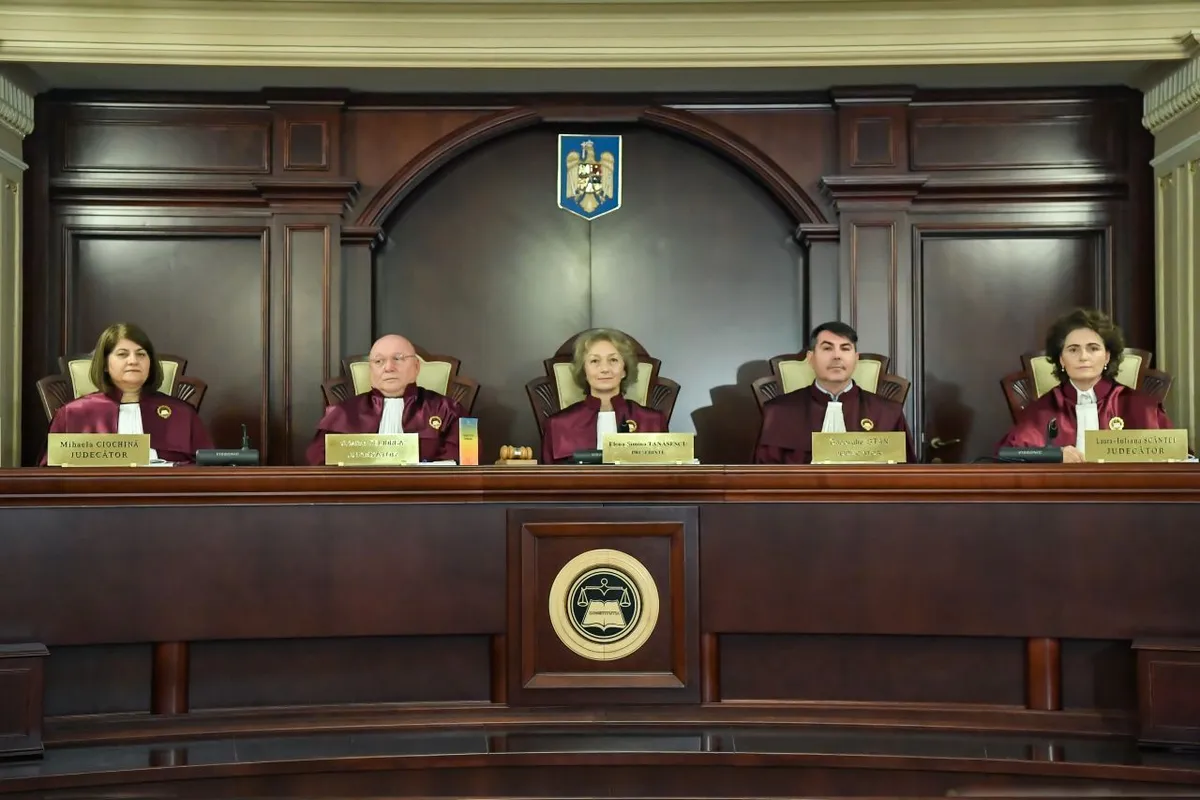
The Constitutional Court admitted Sorin Grindeanu's challenge to Emergency Ordinance 38/2026, ruling by five votes to four that the caretaker cabinet exceeded its constitutional powers.
KEY POINTS
- The Constitutional Court admitted Sorin Grindeanu's challenge to Emergency Ordinance 38/2026.
- The court ruled by five votes to four that a constitutional conflict exists between Parliament and the Bolojan government.
- The ordinance concerns the European SAFE program and approximately 16.7 billion euros in European funding.
- Grindeanu argued the dismissed cabinet exceeded its powers under Article 110, paragraph 4 of the Constitution.
- The ruling opens the possibility of amending or revoking the ordinance and blocking strategic investments.
Romania's Constitutional Court (CCR) has admitted a challenge filed by Chamber of Deputies President Sorin Grindeanu concerning Emergency Ordinance 38/2026, known as the SAFE ordinance. The court found a constitutional conflict between Parliament and the government led by Ilie Bolojan, ruling by five votes to four.
The dispute centers on the timing of the ordinance's adoption and publication. Grindeanu argued that the project was substantially expanded on the morning of May 5 with twelve additional articles. Parliament passed a censure motion dismissing the Bolojan cabinet on the same day, and the ordinance was later published in the Official Gazette on May 8.
“The Bolojan government transformed itself from a delegated legislator, whose democratic mandate had just been withdrawn, into a competing legislative authority with Parliament.”
Grindeanu contended that a dismissed government may only carry out acts necessary for the current administration of public affairs under Article 110, paragraph 4 of the Constitution. He argued that the cabinet exceeded its constitutional limits by issuing a normative act with the force of primary law and by regulating legislative solutions already under parliamentary debate.
The SAFE ordinance includes measures to implement the European SAFE program, through which Romania is to use approximately 16.7 billion euros in European funding. The stakes involve the legality of the normative act, the continuation of military investments, and Romania's use of that funding.
The CCR's decision opens a new legal stage in which the ordinance could be amended or revoked, and strategic investments could face blockages. The exact scope of the findings and the obligations imposed on authorities will be established from the official ruling and its reasoning.
The court's decision on the existence of the conflict validates Grindeanu's challenge on admissibility grounds. Further legal steps will depend on the publication of the full decision and its reasoning.
2 more sources below
COMMENTS (0)
No comments yet. Be the first.
RELATED STORIES

Formula 1 Returns to Africa With Rwanda Grand Prix Deal
Rwanda will host a Formula 1 Grand Prix under a 10-year contract starting in the early 2030s, marking the sport’s return to the continent after more than 30 years.

Trump to Campaign for Hyde-Smith in Mississippi as GOP Super PAC Buys Ads
President Donald Trump will hold a rally for Senator Cindy Hyde-Smith in Corinth as Republicans spend money to defend the Senate seat.

Wall Street rebounds as Nasdaq leads tech recovery after weekly losses
US stocks opened higher on Monday as investors returned to technology shares following steep losses the previous week.
- Venezuela government and opposition agree to review four laws after third dialogue round
- Winter Tire Rule Starts Early on November 15 for Commercial Vehicles
- Canadian Prime Minister Carney Arrives in Ankara for First Official Visit to Türkiye
- Turkish Parliament Speaker Calls IMF Issue a Major Crisis, Backs Diplomacy
- UAE's Lana Nusseibeh Runs for UN Secretary-General
This page was compiled with AI assistance from the outlets named above and passed an automated language check before publication. Montegre has no reporters of its own; the byline names the outlets the story was compiled from. Method and editorial standards