Trump Threatens Huge Taxes on U.S. Firms Building Overseas AI Data Centers
President Donald Trump says he will block American companies from constructing AI data centers abroad, threatening massive taxes and suggesting locations such as Texas, California, or West Virginia.
KEY POINTS
- Trump wants to stop U.S. companies from building AI data centers abroad
- He threatened tremendous taxes or penalties on firms that build overseas
- He suggested Texas, California, or West Virginia as alternative locations
- Gallup polling found more Americans prefer nuclear plants to local data centers
- 40 of 41 ballot initiatives limiting data centers passed in 10 states during the midterms
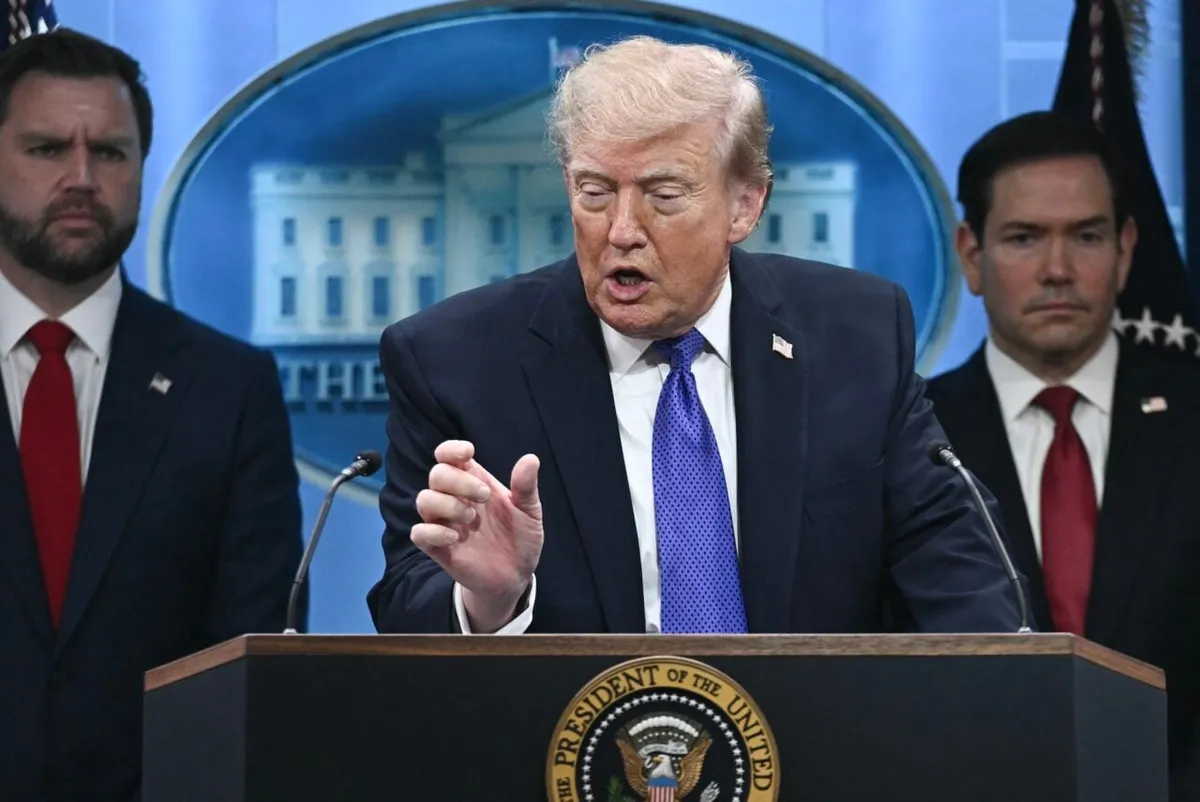
President Donald Trump said the United States will prevent American technology companies from building AI data centers in foreign countries. Speaking from the White House press briefing room on Friday, he stated he had not informed his own staff before making the announcement. He expressed concern that facilities would be constructed in China or European nations such as Finland.
Trump warned that China would take all overseas data centers if the United States did not act. He said tremendous penalties would be imposed on companies that attempt to build abroad, possibly through a form of tax. He added that if firms refuse to build in Texas or California, they would have to build in West Virginia.
“We’re not allowing data centers to go into other countries, because China will take all of them.”
The president argued that local communities earn substantial money from agreements that bring in data centers. He claimed the projects would generate record numbers of jobs and reduce electricity costs because companies would generate their own power. He also said American taxpayers would benefit and their taxes would be lowered.
Trump noted that many Americans oppose data centers in their communities. Gallup polling shows more people would prefer a nuclear power plant over a data center nearby. Concerns include water use, rising electricity prices, and noise. During the midterms, 41 initiatives to limit data center growth appeared on ballots in 10 states, and 40 passed.
Economic reported that federal rules contain a gap allowing Chinese companies to continue training AI models by renting computing capacity from data centers in other countries, even as advanced AI chip shipments to China are restricted. Under a new regulation Washington seeks to apply, data center customers in Indonesia, Malaysia, Singapore, Thailand, and Brazil would need a special license from the U.S. Commerce Department to buy advanced AI chips from American firms such as Nvidia or AMD, according to NBC.
Trump insisted that major technology and AI infrastructure companies have plenty of money and that the American population should benefit from these projects. He did not specify which legal mechanism he would use to enforce the overseas construction ban.
2 more sources below
COMMENTS (0)
No comments yet. Be the first.
RELATED STORIES

Denmark Expels Russian Diplomat Over Alleged Plot Against Ukrainian Rapper
Denmark expels a Russian defense attaché and considers restricting Russian visas after accusing Moscow of planning an attack on a Ukrainian-American rapper.
Ukraine strikes Crimean Bridge with Dutch-made Ruta missiles; Russian drone damages Dutch Embassy in Kyiv
Ukrainian strikes collapsed a bridge span on November 17, and a Russian drone hit a structure behind the Dutch Embassy in Kyiv on November 19.

Tumbler Ridge shooter used ChatGPT to plan eight-person massacre
New details show the 18-year-old gunman consulted the AI chatbot for months before killing eight people in British Columbia.
- Turkish fund probe widens as five Altınbaş firms placed under trusteeship
- Trump calls for immediate end to Ukraine war, cites Putin-Zelensky hatred
- EU Disburses 7.9 Billion Euro Ukraine Facility Tranche, Largest to Date
- Ashton Kutcher's AI Fund Stake Could Reach $7 Billion After Anthropic IPO
- Anthropic mathematician claims AI-assisted proof of 167-year-old Riemann hypothesis
This page was compiled with AI assistance from the outlets named above and passed an automated language check before publication. Montegre has no reporters of its own; the byline names the outlets the story was compiled from. Method and editorial standards