US Holds $12.26 Billion in Venezuelan Oil Revenue Under Custody Account
A KPMG report released by the State Department details how Washington manages and disburses Venezuelan assets following Maduro's capture.
KEY POINTS
- US holds $12.263 billion in Venezuelan oil and asset revenue
- Oil and gas made up 98.74 percent of total deposits
- $12.107 billion has been disbursed to companies and suppliers
- No funds went to Venezuelan government entities
- Remaining account balance is $168.5 million
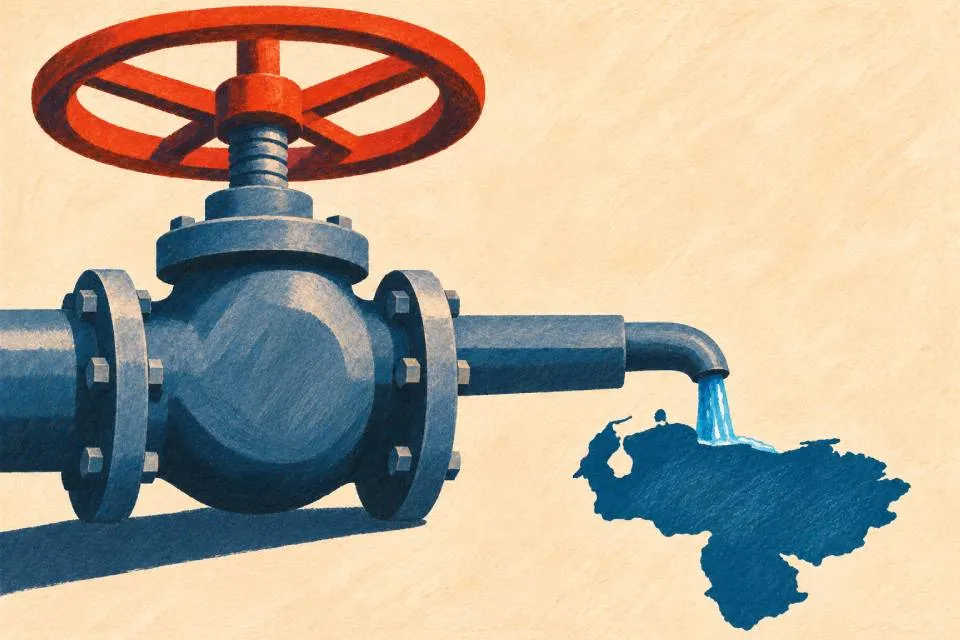
The United States government published a report this month showing how it has safeguarded millions of dollars Venezuela earned this year from oil and other asset sales. The total amount reaches approximately $12.263 billion, which Washington placed under oversight to support macroeconomic stability and restore government functions. The funds were deposited into a special account established by the Trump administration after the January 3 military operation that captured President Nicolas Maduro.
According to the KPMG report, total deposits between January 3 and September 30, 2026, amounted to $12,263,715,308.36. Oil, derivatives, and gas accounted for $12.109 billion, or 98.74 percent of the total. Gold sales contributed $108 million, minerals $22 million, and fertilizers $24.6 million.
“The Venezuela Custody Account serves as the central custody and oversight mechanism for revenues generated by activities related to Venezuelan oil and other assets.”
Of the total, $12.107 billion has been disbursed through approved mechanisms including currency auctions, electronic foreign exchange interventions, cash bill interventions, and payments to suppliers. The account also generated $12.5 million in reinvestment interest. As of September 30, the remaining balance in the Venezuela Custody Account at the US Treasury stood at $168.5 million for future authorized disbursements.
The report reveals that no funds were disbursed to government entities. Instead, 77 percent, or $9.37 billion, went to legal entities including private and public companies, while 23 percent, or $2.87 billion, was allocated elsewhere. Final recipients of these resources are not disclosed for confidentiality reasons.
For several analysts, this scheme in which the United States holds and authorizes the use of Venezuelan money demonstrates the weight the Trump administration holds in Venezuela in the post-Maduro era. Delcy Rodriguez serves as acting president and has held numerous approaches with US authorities since January. CNN contacted the Venezuelan government for comment and is awaiting a response.
The custody account is based on a decree Trump issued on January 9, under which the money deposited belongs to Venezuela but is held by the United States to verify the legality of its origin and use. Washington controls details down to the bags transporting bills, their seals, and the serial numbers of bills injected into the Venezuelan exchange market.
3 more sources below
COMMENTS (0)
No comments yet. Be the first.
RELATED STORIES
Tinubu Calls for APC Unity and Voter Mobilisation Ahead of 2027 Elections
President Tinubu urged APC leaders to reconcile and supporters to secure PVCs during a Lagos prayer session.
UniAbuja unions protest FCT land reallocation plan
University of Abuja unions demand reversal of alleged land allocation to private parties.
Trump Completes 15-Hour Nonstop Flight From China to Washington
The journey from Shenzhen to Joint Base Andrews lasted approximately 15 hours and seven minutes without refueling.
- Jeffries to advance West Bank settler violence bill in first 100 days
- Turkey's Foreign Minister Welcomes Iraq Steps Against PKK Presence in Sinjar
- Lawmakers seek to question Foreign Minister Espá over papal Mass technical failures
- Christian nationalists plan post-Trump push after Republican midterm losses
- B.C. pauses Massey Tunnel environmental review as new government weighs bridge plan
This page was compiled with AI assistance from the outlets named above and passed an automated language check before publication. Montegre has no reporters of its own; the byline names the outlets the story was compiled from. Method and editorial standards