Ancient Mars meteorite found in Sahara suggests water and possible life
The Teghaza 001 meteorite, at least 4.1 billion years old, shows signs of water interaction on early Mars.
KEY POINTS
- Teghaza 001 is at least 4.1 billion years old
- It is the oldest of 435 known Martian meteorites found on Earth
- It was found in eight pieces in Mali's Sahara desert in 2022
- Its chemistry shows signs of interaction with water
- The study was published in the journal Science
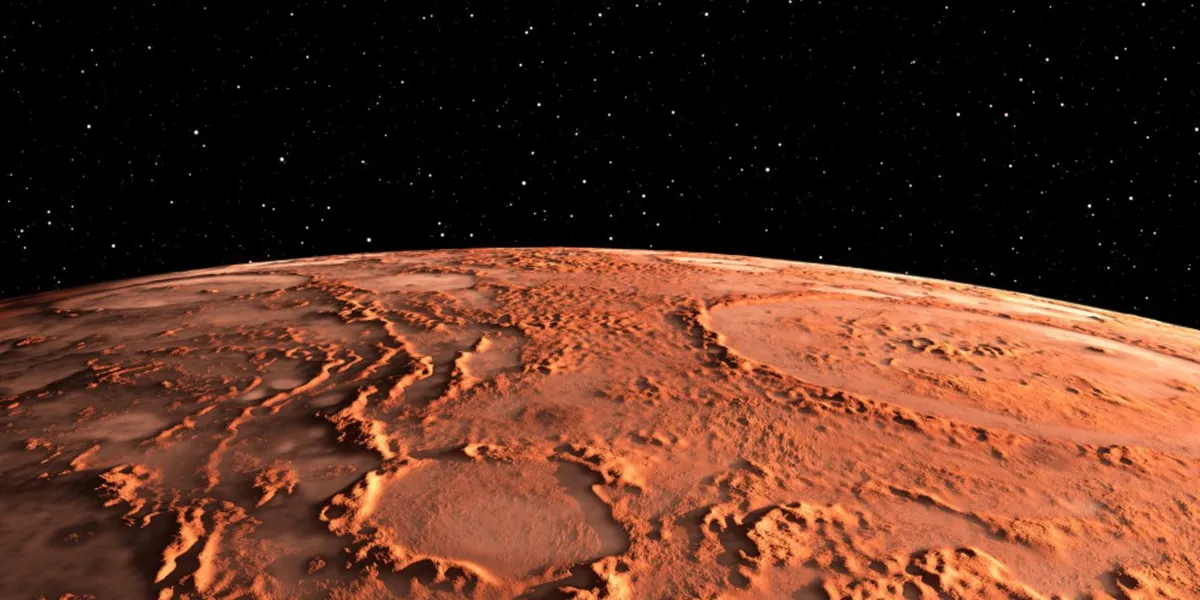
A rare meteorite discovered in the Sahara desert in Mali in 2022 is providing new insight into the early history of Mars. The rock, named Teghaza 001, is at least 4.1 billion years old and is considered the oldest of 435 known Martian meteorites found on Earth.
The meteorite was found in eight pieces about 34 kilometers from the village of Bir Salim in Mali. The largest fragment is roughly the size of a human fist.
“The meteorite is a witness to an era when Mars was likely warmer and wetter than most of its later history.”
Scientists identified the rock as gabbro, an igneous rock formed when magma cools and crystallizes slowly. Its main minerals are pyroxene and olivine, and it also contains zircon crystals that incorporate uranium.
Researchers determined its age using radiometric dating based on the radioactive decay of uranium into lead over time. The results place its formation in the Martian crust at least 4.1 billion years ago, during the early stages of the planet's geological evolution.
The meteorite's chemistry indicates interaction with water during slow cooling and crystallization in the Martian subsurface. This supports the view that conditions on Mars may have been favorable for the development of microbial life.
Jiang Liu, a planetary scientist at NASA's Jet Propulsion Laboratory managed by Caltech, described the meteorite as a witness to an era when Mars was likely warmer and wetter than most of its later history.
Mars is now cold, dry, and barren, but evidence suggests water existed on its surface in the form of rivers, lakes, and possibly an ocean in its northern hemisphere billions of years ago.
2 more sources below
COMMENTS (0)
No comments yet. Be the first.
RELATED STORIES
UN reports 252 million hectares restored, but 2030 goals remain out of reach
A UN assessment released at COP17 in Armenia says nature restoration is advancing across 149 countries but must accelerate sharply to meet 2030 targets.

Mistral releases Large 4 open AI model with one trillion parameters
French AI company Mistral says its new Large 4 model reaches frontier-level performance among open-weight models for coding and cyber defense.

Putin praises Musk as Russia launches Starlink rival Rassvet
Putin calls Elon Musk a real genius while Russia begins deploying its own satellite internet system.
- Rubin Observatory finds possible new dwarf planet beyond Neptune
- EU and Canada to seal future alliance against Trump pressure at Montreal summit
- OpenAI Claims Three AI Scientific Breakthroughs and New Review Plan
- Greenhouse gas concentrations hit record high in 2025, WMO says
- Anthropic Files for Up to $100 Billion IPO at $2 Trillion Valuation
This page was compiled with AI assistance from the outlets named above and passed an automated language check before publication. Montegre has no reporters of its own; the byline names the outlets the story was compiled from. Method and editorial standards