OpenAI Publishes 372 AI-Generated Math Solutions, Sparking Verification Debate
Mathematicians question the reproducibility of results produced by an unreleased internal model and call for independent verification.
KEY POINTS
- OpenAI published 722 manuscripts across 372 problem families generated by an unreleased internal model.
- Only 22 percent of papers include computer-verified Lean formalizations.
- Mathematicians demand model release and independent replication before accepting results.
- Progress reported on three Millennium Prize problems including Riemann and Hodge conjectures.
- Previous Navier-Stokes claim sparked allegations of similarity to unpublished human research.
OpenAI released 722 mathematical manuscripts grouped into 372 result families on GitHub on Tuesday, all generated by an unreleased internal model. The collection spans algebra, number theory, theoretical computer science, mathematical logic, and topology, and includes progress on three Millennium Prize problems such as the Riemann and Hodge conjectures.
The company stated the model required an average of three hours of computing time per solution and that nearly all outputs came from a single prompt to a single agent. Only 162 of the 722 papers, roughly 22 percent, include Lean-formalized main results that mechanically verify every logical step.
“Until and unless they release the model and people can replicate their results, I think you should treat any claims about one-shotting problems with a single agent as unverified.”
MIT mathematician Andrew Sutherland said the single-prompt claim remains unverified until the model is released and the prompts are disclosed. He and other researchers have demanded independent replication before accepting the results.
The publication follows OpenAI's September claim of solving the Navier-Stokes equations, another Millennium Prize problem. That announcement triggered allegations from NYU professor Tristan Buckmaster that the AI solution closely mirrored his unpublished work, which he had checked using OpenAI's Codex tool.
OpenAI said it followed guidelines from its Independent Advisory Group on Mathematics and AI, hosted at the Institute for Advanced Study in Princeton. The company pledged to release the model responsibly after further evaluation and community feedback.
5 more sources below
COMMENTS (0)
No comments yet. Be the first.
RELATED STORIES
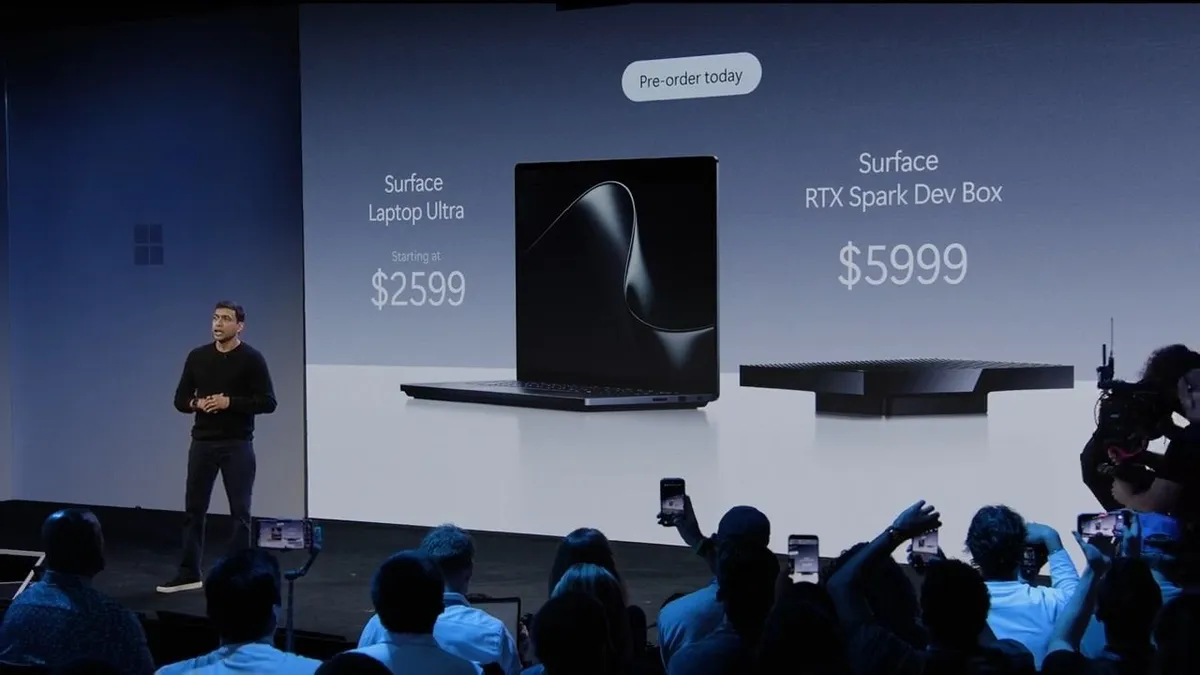
Microsoft and Nvidia Launch Surface Laptop Ultra with RTX Spark Chip
New Windows PCs built for local AI agents start at $2,599 and ship October 16.
Three OpenAI Safety Researchers Fired, Allege Retaliation for Raising Concerns
Former employees Jasmine Wang, Tomek Korbak, and Mikita Balesni dispute OpenAI's misconduct claims, saying they were pushed out for flagging risks and working with external auditors.
India Rejects Musk's Bias Claims as Starlink Awaits Security Clearance
Elon Musk accuses Indian oligarchs of blocking Starlink; the government says all three licensed operators face identical security checks before spectrum allocation.
- Turkey Sets Social Media Age Limit at 15 With e-Devlet Verification
- EU Trade Chief in Beijing for Talks as China Rejects Hybrid Car Curbs
- Turkey Raises Iller Bank Capital to 250 Billion Lira; Approves Energy Expropriations
- Magnitude 7.6 Quake Hits Panama, Triggers Pacific Tsunami Alert for Nine Nations
- Russian strikes kill dozens across Ukraine as winter looms
This page was compiled with AI assistance from the outlets named above and passed an automated language check before publication. Montegre has no reporters of its own; the byline names the outlets the story was compiled from. Method and editorial standards