Spain's Supreme Court Rejects Vox Bid to Bar Grandchildren of Naturalized Citizens from Voting on Nov. 29
The court refused to extend a voting suspension to 189,678 descendants of people naturalized under Spain's Democratic Memory Law, while Iustitia Europa appeals the decision warning the ballots could decide seats in Congress.

KEY POINTS
- Supreme Court rejects Vox and Iustitia Europa request to suspend voting for 189,678 descendants of naturalized citizens
- Court cites infeasibility of executing precautionary measures three weeks before the November 29 elections
- Previous suspension covered more than 163,000 naturalized people, but only 901 proved descent by October 28
- Iustitia Europa appeals the ruling, warning the votes could decide the final seats in Congress
- Foreign and Justice ministries delivered a list of 160,000 people naturalized under the Grandchildren Law
Spain's Supreme Court has rejected a request by Vox and Iustitia Europa to extend a voting suspension to the children of people naturalized under the so-called Grandchildren Law ahead of the November 29 general elections. The court said suspending the vote of these 189,678 people would not be feasible just three weeks before the election, citing serious doubts about the effective execution of the precautionary measures.
The decision affects descendants of Spaniards naturalized under the Democratic Memory Law, which allows people exiled during the Civil War or the Franco regime to recover nationality. The court previously suspended the voting rights of more than 163,000 naturalized people, but as of October 28 only 901 had been able to prove their descent to the authorities.
“We are three weeks away from the celebration of the general elections. The Chamber has serious doubts about the viability of the effective execution of the precautionary measures requested that could now be adopted.”
Iustitia Europa has now appealed the Supreme Court's Monday ruling, arguing that the votes of these descendants could be decisive in constituencies where the margin for awarding the final seat is narrow. The group warns that such ballots could alter the composition of the Congress of Deputies.
Luis María Pardo, lawyer and president of Iustitia Europa, filed the appeal against the order issued by the Fourth Section of the Administrative Litigation Chamber. He argues that a future favorable ruling could be ineffective if the elections have already taken place and the contested votes have been included in the count.
Pardo maintains that correcting the electoral roll after the elections would not guarantee that the possible consequences of those votes on seat distribution could be corrected. He believes the risk should prevail over the administrative difficulties invoked by the Supreme Court to reject the extension of precautionary measures.
The group also argues that the court did not sufficiently explain why urgent checks could not be carried out to identify the affected people before voting. The Ministry of Foreign Affairs and the Ministry of Justice delivered to the Supreme Court the list of 160,000 people naturalized under the Grandchildren Law.
2 more sources below
COMMENTS (0)
No comments yet. Be the first.
RELATED STORIES

Colombian Bombing in Catatumbo Kills Four Dissidents and Captures Six
President Abelardo de la Espriella visited Cúcuta to present captured members of Farc dissident structure 33 after Operation Noah.

São Paulo prosecutors charge Milton Leite and 13 others over PCC bus scheme
Milton Leite and thirteen others are charged with criminal association in an investigation into PCC infiltration of São Paulo public transport.
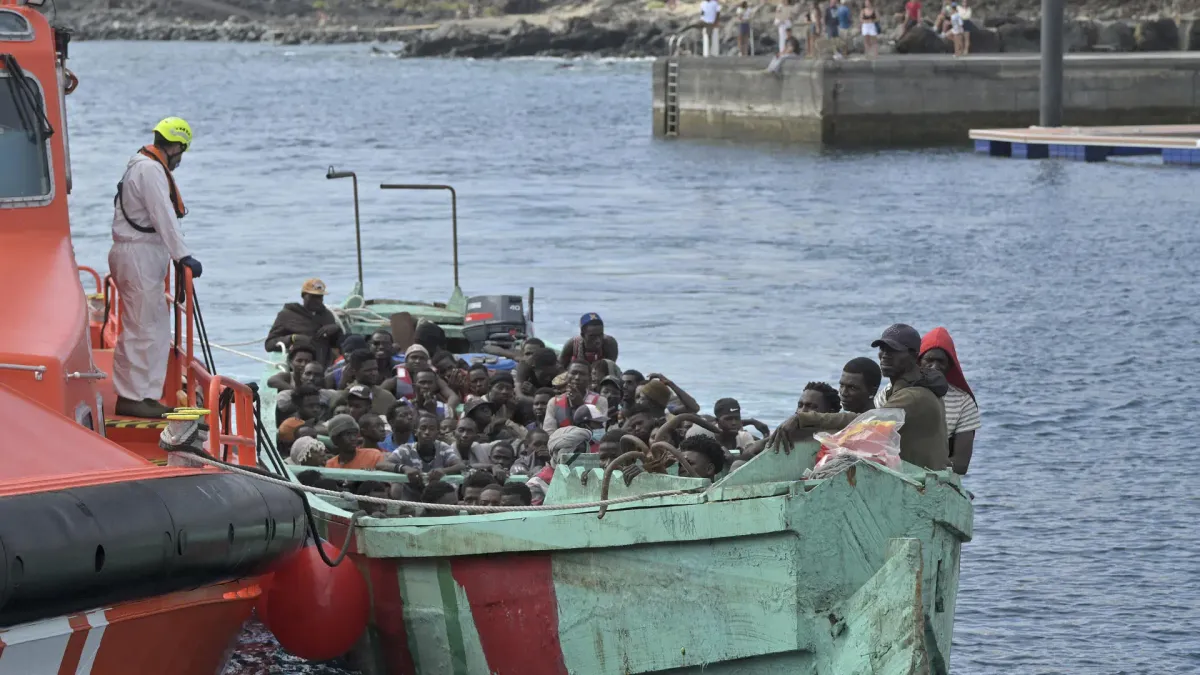
Canary Islands declare migration emergency as thousands arrive in November
More than 5,300 migrants reached the Canary Islands in eight days, prompting emergency aid and inter-island transfers.
- Supreme Court Orders WhatsApp to Submit Digital Arrest Scam Measures
- Portugal braces for severe weather as Lisbon floods and schools close
- Brazil Supreme Court to Hear 6x1 Workweek Reform Dispute
- Oleshky evacuation reunites separated couple after 4-1/2 years
- Dutch PM Speaks at Kristallnacht Event as 200,000 Protest Israel Policy
This page was compiled with AI assistance from the outlets named above and passed an automated language check before publication. Montegre has no reporters of its own; the byline names the outlets the story was compiled from. Method and editorial standards