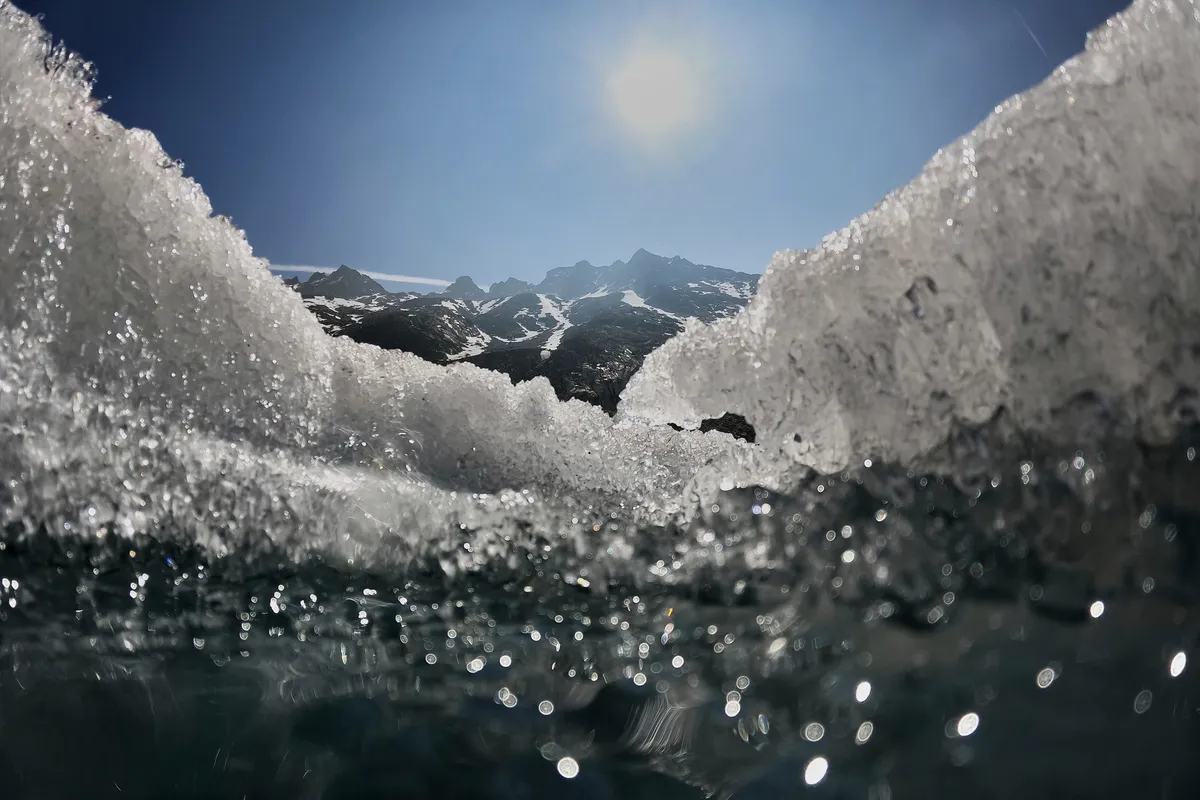
Swiss glaciers lose 20% volume in five years as 2026 melt hits record pace
GLAMOS data shows 5.5% loss this year alone, with experts warning some glaciers could vanish within 10-15 years.
KEY POINTS
- Swiss glaciers lost nearly 20% of ice volume between 2021 and 2026
- 2026 melt of 5.5% ranks as second-largest annual loss on record
- Melt rate 2022-2026 more than double any previous five-year period
- Some glaciers like Scex Rouge may disappear within 10-15 years
- Summer 2026 was Switzerland's hottest since records began in 1864
Switzerland's glaciers have lost nearly 20% of their total ice volume since 2021, according to the Glacier Monitoring in Switzerland (GLAMOS) network. The 2026 melt season ranked as the second-largest on record, with 5.5% of remaining volume disappearing in a single year.
GLAMOS chief Matthias Huss described 2026 as "a catastrophic year" while taking measurements on the Scex Rouge glacier at nearly 3,000 metres altitude. A four-metre aluminium stake installed in late July was fully embedded in ice; by September, more than three metres protruded from the grey surface.
“This is a glacier that isn't surviving. There will be probably no ice in 10 or maybe 15 years.”
"This is a glacier that isn't surviving," Huss said. "There will be probably no ice in 10 or maybe 15 years." The melt rate between 2022 and 2026 was more than twice as high as any previously monitored five-year period.
The acceleration is stark: Swiss glaciers lost 10% of their volume during the 1990s, but 27% in the decade spanning 2016-2026. GLAMOS based its findings on measurements at 23 reference glaciers, extrapolated to nearly 1,300 glacial formations across Switzerland.
The record melt followed Switzerland's hottest summer since measurements began in 1864, with June, July, and August each setting monthly temperature records. A winter with little snowfall preceded the extreme summer heat.
2 more sources below
COMMENTS (0)
No comments yet. Be the first.
RELATED STORIES

Romanian Hauliers Demand TollRo Fine Delay Until Spring 2027
COTAR says electronic tolling apps still defective; parliament to debate emergency bill suspending penalties from October 1.
MLB, White House discuss Grand Teton baseball game
Major League Baseball approached the Trump administration about hosting a game in the national park, but the White House says it is not a priority.

Muğla hosts local climate policy dialogue ahead of COP31
UN officials and municipal leaders urge direct financing and decision-making roles for cities in climate action.
- U.S. Bans $1 Billion in Canadian Imports as Trade War Escalates
- Muğla Students Explore Marine Life in 3D Climate Summit Event
- Trump Administration to Weaken Fuel Economy Standards for Cars, Trucks
- Bill Gates Warns AI Could Cause a Billion Deaths Without Oversight
- Izmir, Afyon Students Win Top Awards at TEKNOFEST 2026 Finals
This page was compiled with AI assistance from the outlets named above and passed an automated language check before publication. Montegre has no reporters of its own; the byline names the outlets the story was compiled from. Method and editorial standards