Greek Parliament to Vote on Electricity Market Reform Bill on Tuesday
The bill incorporates EU Directive 2024/1711 and introduces consumer protection measures, fixed-price contracts, and a 50 percent reduction in certain household charges.
KEY POINTS
- Plenary vote scheduled for Tuesday, November 10, 2026
- Bill incorporates EU Directive 2024/1711 amending Directives 2018/2001 and 2019/944
- Article 6 protects customers from disconnection during pending complaints
- Article 7 requires suppliers to offer fixed-price and dynamic pricing contracts
- Article 57 cuts unit charges for common services by 50 percent for households
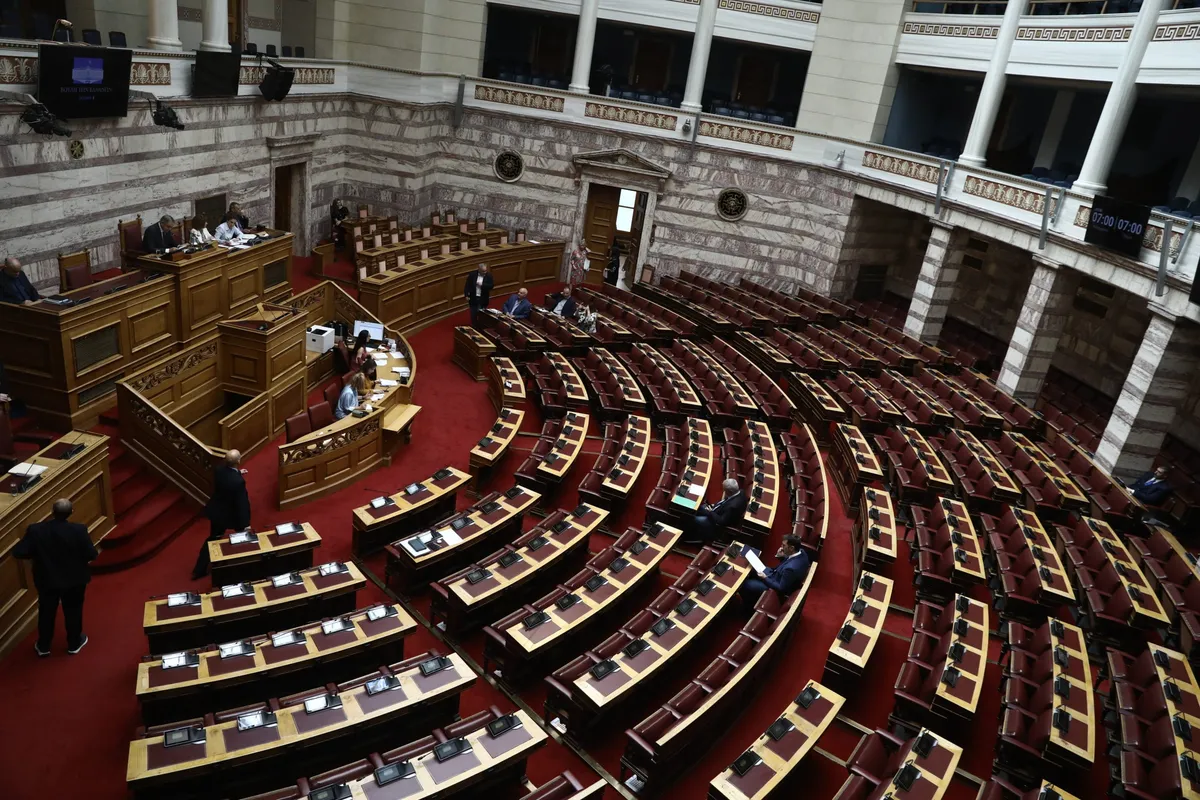
The Greek Parliament's plenary session will consider the electricity market regulation bill on Tuesday, November 10, 2026. The legislation comes from the Ministry of Environment and Energy and incorporates European Union Directive 2024/1711 of June 13, 2024, which amends Directives 2018/2001 and 2019/944.
The Production and Trade Committee completed its review of the bill on Monday evening, November 9, 2026. Ministry officials stated that the bill regulates consumer protection issues in the electricity market and introduces stricter rules for greater transparency.
“The new provision does not remove but adds an additional level of protection for consumers, while for vulnerable categories the enhanced existing protective framework is not touched at all and remains as is.”
Article 6 establishes freedom of supplier choice and protects customers from power disconnections while complaints or out-of-court dispute resolutions are pending. Article 7 imposes a legal obligation on suppliers to offer fixed-price tariffs and dynamic pricing contracts.
Article 8 requires suppliers to manage risk within their organization so that any lack of risk compensation is not passed on to consumers. Article 9 strengthens the framework for the supplier of last resort, allowing consumers to remain there for at least six months.
Article 57 reduces the unit charge for common services by 50 percent for household consumers in the first consumption bracket. Deputy Minister Nikos Tsafos also referred to the Decarbonization Fund and the goal of reducing island dependence on oil-based electricity generation while improving the tourism product.
The European Investment Bank plays a role in managing these funds due to its technical expertise, according to Tsafos. Environment and Energy Minister Stamatis Papastavrou and Deputy Minister Nikos Tsafos stated that the enhanced existing protective framework for vulnerable categories remains untouched.
2 more sources below
COMMENTS (0)
No comments yet. Be the first.
RELATED STORIES

Paramount Skydance Posts $73 Million Q3 Profit, Plans Streaming Bundle for 2027
Paramount Skydance returned to profit in its first post-merger quarter and announced an HBO Max and Paramount+ bundle launching early next year.

Global Fossil Fuel CO2 Emissions Projected to Fall 0.4 Percent in 2026
A preliminary Global Carbon Budget analysis says renewables and Middle East supply constraints drove the decline, but researchers warn it is not a lasting trend.

Trump Signals Openness to Immigration Deal With Democrats After Midterms
President Trump says he is willing to work with Democrats on immigration, while Homeland Security Secretary Markwayne Mullin rules out amnesty.
- Umno Paid Najib's RM50 Million Fine, House Arrest Suspended Pending Legal Clarity
- Brazil Extends Gasoline and Ethanol Tax Exemption for 30 Days at Cost of $3.57 Billion
- Millar Western indefinitely curtails Quesnel River Pulp mill operations
- Senate to vote on energy permitting bill after midterm election
- Türkiye Unveils Green Deal Action Plan for 2026-2030
This page was compiled with AI assistance from the outlets named above and passed an automated language check before publication. Montegre has no reporters of its own; the byline names the outlets the story was compiled from. Method and editorial standards